
The Salmon Quinoa Bowl is a modern culinary delight that merges the rich flavors of tender salmon with the wholesome goodness of quinoa and a medley of fresh vegetables.
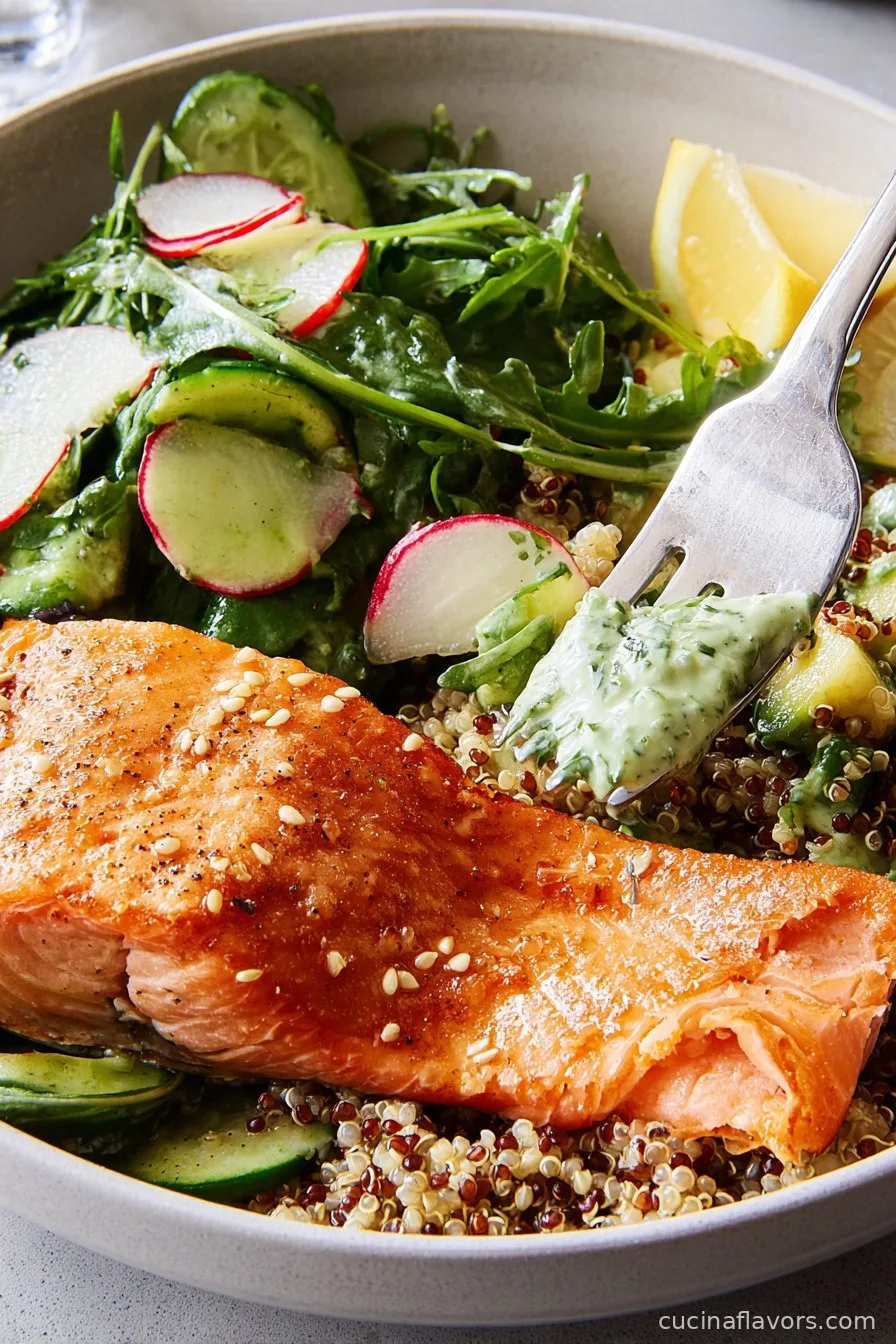
As more people embrace nutritious eating habits, this dish has gained immense popularity, celebrated for its harmonious balance between taste and health benefits. Historically, quinoa traces its roots back to the ancient civilizations of the Andes in South America and is beloved for its high protein and nutrient content.
Salmon, on the other hand, is a prized choice in global cuisine, from Scandinavian gravlax to Japanese sushi, due to its succulent texture and high levels of omega-3 fatty acids.
In recent years, health-conscious cooks have sought creative ways to enjoy both salmon and quinoa in one bowl, inspired by global influences such as poke and grain bowls.
This Salmon Quinoa Bowl recipe is the answer for anyone seeking a satisfying yet healthy dish that is as versatile as it is delicious. Easy enough for a weeknight meal yet impressive enough for entertaining, this bowl offers a blank canvas for endless flavor combinations while providing ample nutrition.
Whether you are looking for meal prep ideas, striving to include more superfoods in your diet, or simply craving something fresh and flavorful, the Salmon Quinoa Bowl will surely delight your tastebuds and fuel your body with every bite.
Ingredients
- 2 salmon fillets (about 6 ounces each)
- 1 cup uncooked quinoa
- 2 cups water or low-sodium vegetable broth
- 1 cup cherry tomatoes, halved
- 1 cucumber, diced
- 1 avocado, sliced
- 2 cups fresh baby spinach
- ¼ cup red onion, thinly sliced
- 1 tablespoon olive oil
- 1 tablespoon lemon juice
- 1 teaspoon garlic powder
- 1 teaspoon smoked paprika
- Salt and black pepper to taste
- ¼ cup feta cheese, crumbled (optional)
- Fresh dill or parsley for garnish
Instructions
- Rinse the quinoa under cold water, then combine with 2 cups of water or vegetable broth in a saucepan. Bring to a boil, then reduce heat, cover, and simmer for 15 minutes until the liquid is absorbed. Remove from heat and fluff with a fork.
- Preheat your oven to 400°F (200°C). Line a baking sheet with parchment paper or foil.
- Pat the salmon fillets dry with a paper towel, then drizzle with olive oil, lemon juice, garlic powder, smoked paprika, salt, and black pepper. Rub the spices evenly over the fillets.
- Place the seasoned salmon on the prepared baking sheet and bake for 12-15 minutes, or until the fish flakes easily with a fork.
- While the salmon cooks, prepare the vegetables. Slice cherry tomatoes, dice cucumber, slice avocado, and thinly slice red onion.
- To assemble the bowls, start by layering cooked quinoa at the base of each serving bowl. Top with baby spinach, then arrange cherry tomatoes, cucumber, avocado, and red onion over the greens.
- Place a baked salmon fillet on top of each bowl. Sprinkle with crumbled feta cheese if desired and garnish with fresh dill or parsley.
- Finish with a drizzle of olive oil and an extra squeeze of lemon juice for added brightness. Serve immediately.
Nutritional Information
This Salmon Quinoa Bowl is a nutritional powerhouse, packing a wealth of vitamins, minerals, healthy fats, and proteins into one satisfying meal. Each serving delivers roughly 500-600 calories, depending on ingredient choices like the addition of feta cheese.
Salmon provides a rich source of omega-3 fatty acids, crucial for heart and brain health, along with high-quality protein that supports muscle repair and growth. Quinoa, a complete plant protein, contributes essential amino acids, dietary fiber for digestive health, and significant amounts of magnesium, iron, and B vitamins.
The fresh vegetables, such as tomatoes, cucumbers, and spinach, boost the bowl’s vitamin C, potassium, and antioxidant content. Avocado adds heart-healthy monounsaturated fats and fiber, while the optional feta cheese contributes calcium and flavor complexity.
Compared to many other grain bowls, this Salmon Quinoa Bowl is lower in saturated fat and loaded with anti-inflammatory nutrients, offering a balanced macronutrient profile ideal for lunch, dinner, or meal prep. It’s gluten-free and easily adaptable for various dietary preferences, making it a staple for balanced eating.
Wine and Beverage Pairings
Pair your Salmon Quinoa Bowl with a crisp, refreshing beverage that complements its vibrant flavors. A dry white wine like Sauvignon Blanc or Pinot Grigio enhances the citrus undertones of the salmon while balancing the richness of avocado and feta.
For a non-alcoholic option, try sparkling water with a splash of lemon or cucumber, or a lightly brewed green tea for subtlety and a gentle palate cleanser.
If you prefer something a bit richer, a light wheat ale or a session IPA works beautifully to bridge the earthy notes of quinoa with the bright, zesty flavors in the bowl.
Cooking Tips and Variations
To get the most flavor and variety from your Salmon Quinoa Bowl, consider marinating the salmon for 15-30 minutes in a mix of olive oil, lemon juice, garlic, and your favorite herbs before baking. For a crispier texture, try pan-searing the salmon skin-side down before finishing it in the oven.
Quinoa can be cooked in vegetable or chicken broth instead of water for added flavor. Swap out vegetables based on seasonal availability—roasted sweet potatoes, kale, or bell peppers are excellent additions. For an Asian-inspired twist, drizzle with a soy-ginger dressing and top with sesame seeds.
Vegetarians can substitute salmon with roasted chickpeas or tofu for a protein-rich alternative. If you are meal prepping, keep the components separate and assemble just before serving to maintain the freshness of the vegetables and the flakiness of the salmon.
For extra crunch, add a sprinkle of toasted seeds or nuts. Adjust salt and pepper to taste, and don’t shy away from using fresh herbs as they elevate the bowl’s fragrance and flavor.
Experiment with different dressings or sauces such as tzatziki, pesto, or a balsamic reduction to keep this Salmon Quinoa Bowl exciting meal after meal.

Serving Suggestions
Presentation and serving are keys to transforming your Salmon Quinoa Bowl from a simple meal into a visually enticing and satisfying dining experience. Begin by selecting wide, shallow bowls—these allow each ingredient to be displayed artfully.
Layer the quinoa as a hearty base, fan out fresh spinach leaves, and arrange the veggies in vibrant clusters for an appealing contrast of colors and textures. Position the salmon fillet prominently on top, inviting attention to its glistening, flaky texture.
For added color and freshness, sprinkle chopped herbs like dill, parsley, or chives across the entire bowl. If entertaining, serve with lemon wedges on the side, letting guests adjust the brightness to their preference. Offer extra olive oil, vinegar, or a tangy yogurt-based sauce at the table for drizzling.
Accompany the bowls with a slice of crusty whole-grain bread or some seed crackers if you’d like to round out the meal. For family-style serving, arrange all components separately so everyone can build their own customized Salmon Quinoa Bowl.
Serve warm for optimal comfort or at room temperature for a refreshing and light meal, making this recipe perfect for any season or occasion.
Health Benefits
The Salmon Quinoa Bowl is more than just a flavorful meal—it’s a celebration of healthful ingredients working synergistically to support your well-being. Salmon is a renowned source of omega-3 fatty acids, which are essential for heart health, cognitive function, and fighting inflammation.
It also delivers a powerful dose of lean protein, keeping you full and supporting muscle health. Quinoa, a gluten-free whole grain, is rich in fiber, antioxidants, and complete proteins, contributing to digestive health and sustained energy release.
The diverse blend of vegetables in this bowl assures a variety of vitamins, particularly vitamin C (for immune support), vitamin K (for bone strength), and potassium (for blood pressure regulation). Avocado brings healthy monounsaturated fats and fiber, further supporting digestive health and satiety.
Including ingredients like spinach and tomatoes enriches the dish with plant-based phytonutrients and antioxidants. The balanced macronutrient profile makes this bowl suitable for those aiming to lose weight, build muscle, or maintain overall health.
Low in added sugars and adaptable for many dietary needs, the Salmon Quinoa Bowl is a smart choice for anyone looking to enjoy a nutrient-dense, wholesome meal.
Frequently Asked Questions
Yes, you can use high-quality canned salmon as a time-saving substitute. Drain thoroughly and flake the salmon over the bowl. Adjust the seasonings as desired since canned salmon may contain added salt.
Absolutely! Prepare all components ahead of time and store them in separate airtight containers in the refrigerator. Assemble just before eating for optimal freshness.
Yes, simply omit the feta cheese or substitute it with a dairy-free cheese alternative. The bowl remains delicious and nutritious without dairy.
This recipe is naturally gluten-free since quinoa is a gluten-free grain and no gluten-containing ingredients are used. Always check labels on any add-ons or seasoning blends for hidden gluten.
You can substitute or add proteins such as grilled shrimp, cooked chicken breast, tofu, or roasted chickpeas for variety, depending on your dietary preferences.
The Salmon Quinoa Bowl represents the best of modern, nutritious cooking—fusing flavors, colors, and textures in a single, easy-to-make meal. Whether you are preparing dinner for your family, impressing guests, or simply nourishing yourself with a wholesome lunch, this bowl offers both convenience and satisfaction. Its flexibility means you can enjoy countless variations while reaping the benefits of high-quality proteins, complex carbohydrates, and an abundance of vitamins and minerals. Rich in history yet perfect for today’s health-focused lifestyles, the Salmon Quinoa Bowl is sure to become a staple in your kitchen, delivering vibrant flavor and essential nutrition in every bowlful.
Ingredients
- 2 salmon fillets (about 6 ounces each)
- 1 cup uncooked quinoa
- 2 cups water or low-sodium vegetable broth
- 1 cup cherry tomatoes, halved
- 1 cucumber, diced
- 1 avocado, sliced
- 2 cups fresh baby spinach
- ¼ cup red onion, thinly sliced
- 1 tablespoon olive oil
- 1 tablespoon lemon juice
- 1 teaspoon garlic powder
- 1 teaspoon smoked paprika
- Salt and black pepper to taste
- ¼ cup feta cheese, crumbled (optional)
- Fresh dill or parsley for garnish
Instructions
-
1Rinse the quinoa under cold water, then combine with 2 cups of water or vegetable broth in a saucepan. Bring to a boil, then reduce heat, cover, and simmer for 15 minutes until the liquid is absorbed. Remove from heat and fluff with a fork.
-
2Preheat your oven to 400°F (200°C). Line a baking sheet with parchment paper or foil.
-
3Pat the salmon fillets dry with a paper towel, then drizzle with olive oil, lemon juice, garlic powder, smoked paprika, salt, and black pepper. Rub the spices evenly over the fillets.
-
4Place the seasoned salmon on the prepared baking sheet and bake for 12-15 minutes, or until the fish flakes easily with a fork.
-
5While the salmon cooks, prepare the vegetables. Slice cherry tomatoes, dice cucumber, slice avocado, and thinly slice red onion.
-
6To assemble the bowls, start by layering cooked quinoa at the base of each serving bowl. Top with baby spinach, then arrange cherry tomatoes, cucumber, avocado, and red onion over the greens.
-
7Place a baked salmon fillet on top of each bowl. Sprinkle with crumbled feta cheese if desired and garnish with fresh dill or parsley.
-
8Finish with a drizzle of olive oil and an extra squeeze of lemon juice for added brightness. Serve immediately.
Approximate Information for One Serving
Nutrition Disclaimers
Number of total servings shown is approximate. Actual number of servings will depend on your preferred portion sizes.
Nutritional values shown are general guidelines and reflect information for 1 serving using the ingredients listed, not including any optional ingredients. Actual macros may vary slightly depending on specific brands and types of ingredients used.
To determine the weight of one serving, prepare the recipe as instructed. Weigh the finished recipe, then divide the weight of the finished recipe (not including the weight of the container the food is in) by the desired number of servings. Result will be the weight of one serving.
Did you make this recipe?
Please consider Pinning it!
Leave a Reply