
The Low-Carb Turkey Gyro Bowl is a modern culinary twist on the iconic Greek gyro, delivering classic Mediterranean flavors in a lighter, more nutritious format. With the rising popularity of low-carb and high-protein diets, health-conscious home cooks are seeking ways to enjoy their favorite comfort foods without the guilt.
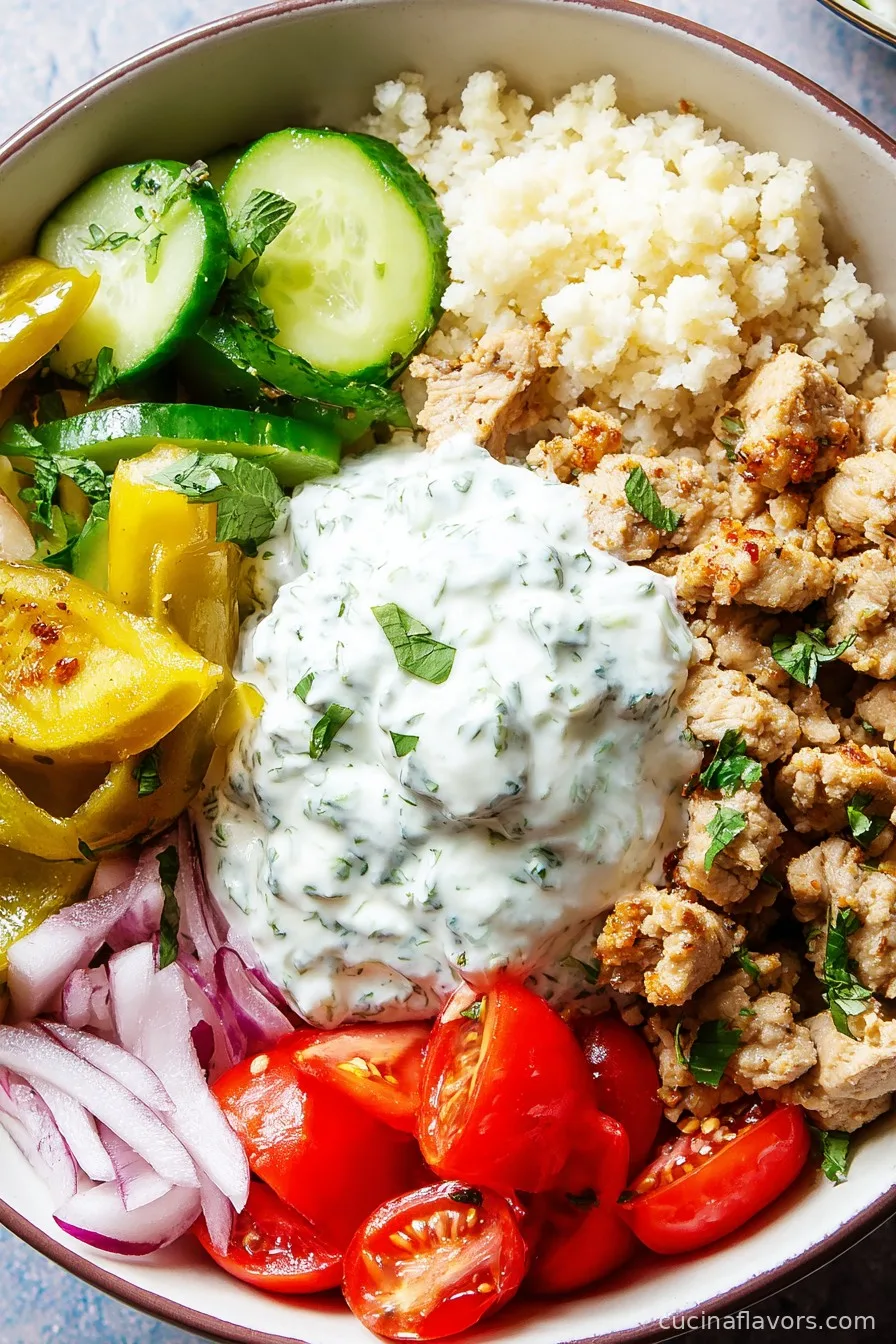
The traditional gyro, famous for its savory meat, tangy tzatziki, and fresh vegetables, is typically wrapped in a pita.
However, our Low-Carb Turkey Gyro Bowl transforms the experience by swapping the bread for a vibrant, layered bowl packed with lean ground turkey, crisp vegetables, creamy tzatziki, and a sprinkle of feta cheese.
This recipe provides the full gyro experience with a lower carbohydrate count, making it ideal for anyone aiming to reduce carbs without sacrificing taste.
Not only is the Low-Carb Turkey Gyro Bowl perfect for quick weeknight dinners, but it also fits seamlessly into meal prep routines and satisfies those Mediterranean food cravings.
With roots in classic Greek street fare, this bowl highlights the bold seasonings, freshness, and balance of flavors characteristic of the region, offering a wholesome meal that’s light yet indulgent. Embracing traditional spices, juicy turkey, and vibrant produce, every bite of this gyro bowl is both satisfying and nourishing.
Whether you’re living the low-carb lifestyle, managing your macros, or simply seeking a delicious and colorful dish for your menu, the Low-Carb Turkey Gyro Bowl is a winning option, ready to bring heartiness and zest to your table.
Ingredients
- 1 pound lean ground turkey (93% lean preferred)
- 1 tablespoon olive oil
- 1 teaspoon ground cumin
- 1 teaspoon dried oregano
- 1 teaspoon garlic powder
- ½ teaspoon onion powder
- ½ teaspoon smoked paprika
- ½ teaspoon ground coriander
- ½ teaspoon salt
- ¼ teaspoon black pepper
- 2 cups chopped romaine lettuce
- 1 cup cherry tomatoes, halved
- ½ small red onion, thinly sliced
- 1 cup cucumber, diced
- ½ cup Kalamata olives, pitted and sliced
- ½ cup feta cheese, crumbled
- 1 cup Greek yogurt (full fat or reduced fat)
- 1 small garlic clove, finely grated
- 2 tablespoons lemon juice
- 2 tablespoons fresh dill, chopped
- 1 tablespoon extra-virgin olive oil (for tzatziki)
- Salt and pepper to taste (for tzatziki)
Instructions
- Combine the ground turkey with cumin, oregano, garlic powder, onion powder, smoked paprika, ground coriander, salt, and black pepper in a large mixing bowl. Mix well until all spices are evenly distributed.
- Heat 1 tablespoon of olive oil in a nonstick skillet over medium-high heat. Add the seasoned ground turkey, breaking it into crumbles as it cooks. Sauté for 7-10 minutes or until cooked through and no longer pink. Drain any excess liquid if necessary.
- While the turkey cooks, prepare the tzatziki sauce by combining Greek yogurt, grated garlic, lemon juice, fresh dill, and 1 tablespoon olive oil in a bowl. Stir well. Season with salt and pepper to taste. For best flavor, refrigerate until ready to use.
- To assemble the bowls, start with a generous bed of chopped romaine lettuce. Top with cooked turkey, then layer with cherry tomatoes, sliced red onion, diced cucumber, Kalamata olives, and crumbled feta cheese.
- Drizzle tzatziki sauce over each bowl. Garnish with extra fresh dill or a wedge of lemon if desired.
- Serve immediately, or store components separately in airtight containers for meal prep and enjoy within 4 days.
Nutritional Information
A single serving of the Low-Carb Turkey Gyro Bowl delivers an exceptional nutritional profile tailored to health-conscious eaters and low-carb enthusiasts. Each bowl, when divided into four portions, contains approximately 370 calories, making it an energizing yet sensible meal choice.
With around 33 grams of protein from the lean ground turkey and Greek yogurt, this dish supports muscle repair and satiety, keeping you fuller for longer periods.
The healthy fats from olive oil, feta cheese, and olives contribute approximately 18 grams of fat per serving, primarily unsaturated, promoting heart health and aiding in the absorption of fat-soluble vitamins.
Net carbohydrates are kept low, hovering at around 9 grams per serving, thanks to the omission of pita bread and the focus on non-starchy vegetables like lettuce, cucumber, and tomatoes.
This carb reduction is especially valuable for individuals managing their carbohydrate intake for weight loss, blood sugar regulation, or metabolic health. Beyond macronutrients, the Low-Carb Turkey Gyro Bowl is a vehicle for essential micronutrients. Fresh vegetables provide an abundance of vitamins A and C, potassium, fiber, and hydration.
The yogurt-based tzatziki is rich in calcium and probiotics, supporting gut health and bone strength. Additionally, the use of lean turkey ensures lower cholesterol and saturated fat compared to traditional gyro meats.
As part of a balanced diet, this bowl aligns with Mediterranean eating patterns, recognized worldwide for their cardiovascular and metabolic benefits. Adjusting ingredient quantities or customizing vegetable selections can cater to individual nutritional needs without compromising the meal's wholesome essence.
Wine and Beverage Pairings
Pairing the Low-Carb Turkey Gyro Bowl with the right beverage enhances its Mediterranean ambiance. A crisp, dry white wine such as Sauvignon Blanc or Pinot Grigio brings out the dish’s herbal and citrus notes, while a light-bodied rosé complements the creamy tzatziki and briny feta without overwhelming the palate.
For a non-alcoholic option, consider sparkling water with a splash of lemon or cucumber slices for a refreshing, palate-cleansing effect. Iced herbal teas, especially mint or chamomile, echo Greek culinary traditions and serve as a soothing accompaniment.
If you prefer beer, opt for a light, low-carb lager, which won't compete with the gyro bowl’s vibrant flavors. These selections maintain the meal’s healthful intent and keep the focus on its fresh, lively ingredients.
Cooking Tips and Variations
For the best-tasting Low-Carb Turkey Gyro Bowl, opt for lean ground turkey to maintain a balance between juiciness and heart-healthy benefits. If you prefer a slightly fattier, juicier meat, a blend of dark and white meat turkey works well.
For deeper flavor, prepare the tzatziki sauce a few hours ahead—this allows the garlic and fresh dill to infuse the yogurt, creating a richer, more developed taste.
If you enjoy a little heat, a pinch of crushed red pepper flakes in the turkey mixture can elevate the flavor without impacting carb count.
Customizing your bowl is easy: add more or fewer vegetables based on preference, or include roasted eggplant or zucchini for extra Mediterranean flair while maintaining low-carb integrity. For those craving crunch, a handful of lightly toasted pine nuts offers a nutty depth.
When meal-prepping, pack the turkey, veggies, and tzatziki separately to keep everything crisp and fresh; mix just before eating. If you are dairy-free, substitute plain coconut or almond yogurt in the tzatziki and omit feta, or use a plant-based cheese.
For enhanced umami, a dash of Worcestershire or soy sauce in the turkey mixture adds complexity. Finally, a squeeze of lemon just before serving brightens the entire bowl and brings out the fresh herbs' aromatics.

Serving Suggestions
When presenting the Low-Carb Turkey Gyro Bowl, attention to color, texture, and balance can turn an everyday meal into an impressive dining experience. Serve each bowl layered, starting with a generous bed of crisp romaine lettuce to lend crunchy freshness and a vibrant green backdrop.
Arrange the seasoned turkey in the center, then build outward with neat, colorful groupings of cherry tomatoes, sliced red onions, diced cucumber, and sliced Kalamata olives. Sprinkle with a moderate amount of crumbled feta cheese for creamy, tangy contrast.
Generously drizzle homemade tzatziki sauce over the top, letting it trickle over the turkey and vegetables. For an extra flourish, garnish with a few sprigs of fresh dill and a wedge of lemon. If hosting guests, set up a build-your-own gyro bowl bar, allowing everyone to personalize ingredients and portions.
Adding small bowls of extra toppings such as sliced pepperoncini, pickled red onions, or chopped parsley lets diners further customize their bowls. Serve alongside warm lemon wedges to highlight the Mediterranean flavors. For meal prepping, store each component in separate containers and assemble fresh before eating to preserve texture.
This gyro bowl is substantial enough to serve as a main dish, perfect for lunch or a light dinner, and pairs beautifully with simple side salads or roasted vegetables.
Whether enjoyed at home, at work, or picnic-style, the Low-Carb Turkey Gyro Bowl delivers hearty satisfaction without the heaviness commonly associated with traditional gyro plates.
Health Benefits
The Low-Carb Turkey Gyro Bowl stands out as a nutritional powerhouse, making it a smart choice for a wide range of dietary preferences and health goals.
As a low-carb dish, it supports stable blood sugar levels, making it particularly suitable for individuals managing diabetes, metabolic syndrome, or those pursuing a ketogenic or low-glycemic lifestyle. Lean ground turkey provides abundant high-quality protein, essential for satiety, muscle recovery, and the maintenance of lean body mass.
The inclusion of a variety of fresh vegetables delivers fiber, antioxidants, vitamins, and minerals, all vital for vibrant health and strong immunity. The olive oil and olives in the dish supply heart-healthy monounsaturated fats, which help reduce LDL cholesterol and support cardiovascular function.
Greek yogurt in the homemade tzatziki offers gut-friendly probiotics and calcium for bone health. Additionally, the bowl's components are naturally gluten-free (provided processed ingredients are verified), accommodating those with gluten sensitivities or celiac disease.
This meal’s reliance on minimally processed, whole-food ingredients ensures that it is free from excessive sodium and hidden sugars common in many restaurant gyros. By omitting the pita, the bowl keeps total carbohydrates low, aiding those on weight loss journeys or managing carbohydrate intake.
For anyone seeking a meal that offers both taste and health benefits, this gyro bowl delivers nutrient density, balance, and satisfaction.
Frequently Asked Questions
Absolutely! The Low-Carb Turkey Gyro Bowl is ideal for meal prepping. Store the cooked turkey, chopped vegetables, and tzatziki sauce separately in airtight containers. Assemble fresh before eating to maintain the best texture and flavor.
You can substitute ground chicken or lean beef for turkey. Swap feta cheese for goat cheese or omit it for a dairy-free version. Use any fresh, crunchy vegetables you have on hand like bell peppers or shredded carrots.
Yes, when all ingredients are verified gluten-free (especially feta and yogurt), the dish is naturally gluten-free as it contains no pita or wheat-based items.
Yes! Substitute the Greek yogurt in the tzatziki with a plain, unsweetened dairy-free yogurt and either omit the feta or choose a plant-based cheese alternative. The bowl will still be full of flavor and texture.
The base recipe is not spicy, focusing on aromatic Mediterranean herbs and spices. For a spicier bowl, add crushed red pepper or a dash of hot sauce to the turkey.
The Low-Carb Turkey Gyro Bowl merges the healthful traditions of Mediterranean cuisine with contemporary low-carb sensibilities, offering a deliciously satisfying and nourishing meal for any occasion. Its vibrant assembly of seasoned turkey, crunchy vegetables, and creamy tzatziki ensures every bite is packed with flavor, texture, and valuable nutrients. Versatile, easy to prepare, and endlessly customizable, this gyro bowl is perfect for busy weeknights, meal prepping, or impressing guests with a lighter take on Greek street food. Enjoy guilt-free indulgence and feel good about every spoonful, knowing you’re making a choice that benefits both your taste buds and your wellbeing.
Ingredients
- 1 pound lean ground turkey (93% lean preferred)
- 1 tablespoon olive oil
- 1 teaspoon ground cumin
- 1 teaspoon dried oregano
- 1 teaspoon garlic powder
- ½ teaspoon onion powder
- ½ teaspoon smoked paprika
- ½ teaspoon ground coriander
- ½ teaspoon salt
- ¼ teaspoon black pepper
- 2 cups chopped romaine lettuce
- 1 cup cherry tomatoes, halved
- ½ small red onion, thinly sliced
- 1 cup cucumber, diced
- ½ cup Kalamata olives, pitted and sliced
- ½ cup feta cheese, crumbled
- 1 cup Greek yogurt (full fat or reduced fat)
- 1 small garlic clove, finely grated
- 2 tablespoons lemon juice
- 2 tablespoons fresh dill, chopped
- 1 tablespoon extra-virgin olive oil (for tzatziki)
- Salt and pepper to taste (for tzatziki)
Instructions
-
1Combine the ground turkey with cumin, oregano, garlic powder, onion powder, smoked paprika, ground coriander, salt, and black pepper in a large mixing bowl. Mix well until all spices are evenly distributed.
-
2Heat 1 tablespoon of olive oil in a nonstick skillet over medium-high heat. Add the seasoned ground turkey, breaking it into crumbles as it cooks. Sauté for 7-10 minutes or until cooked through and no longer pink. Drain any excess liquid if necessary.
-
3While the turkey cooks, prepare the tzatziki sauce by combining Greek yogurt, grated garlic, lemon juice, fresh dill, and 1 tablespoon olive oil in a bowl. Stir well. Season with salt and pepper to taste. For best flavor, refrigerate until ready to use.
-
4To assemble the bowls, start with a generous bed of chopped romaine lettuce. Top with cooked turkey, then layer with cherry tomatoes, sliced red onion, diced cucumber, Kalamata olives, and crumbled feta cheese.
-
5Drizzle tzatziki sauce over each bowl. Garnish with extra fresh dill or a wedge of lemon if desired.
-
6Serve immediately, or store components separately in airtight containers for meal prep and enjoy within 4 days.
Approximate Information for One Serving
Nutrition Disclaimers
Number of total servings shown is approximate. Actual number of servings will depend on your preferred portion sizes.
Nutritional values shown are general guidelines and reflect information for 1 serving using the ingredients listed, not including any optional ingredients. Actual macros may vary slightly depending on specific brands and types of ingredients used.
To determine the weight of one serving, prepare the recipe as instructed. Weigh the finished recipe, then divide the weight of the finished recipe (not including the weight of the container the food is in) by the desired number of servings. Result will be the weight of one serving.
Did you make this recipe?
Please consider Pinning it!



Leave a Reply