
If you are searching for a comforting and nourishing meal that combines the richness of savory broth, the heartiness of dumplings, and the freshness of greens, look no further than the Savory Dumpling Ramen Bowl with Soft-Boiled Eggs and Fresh Greens.
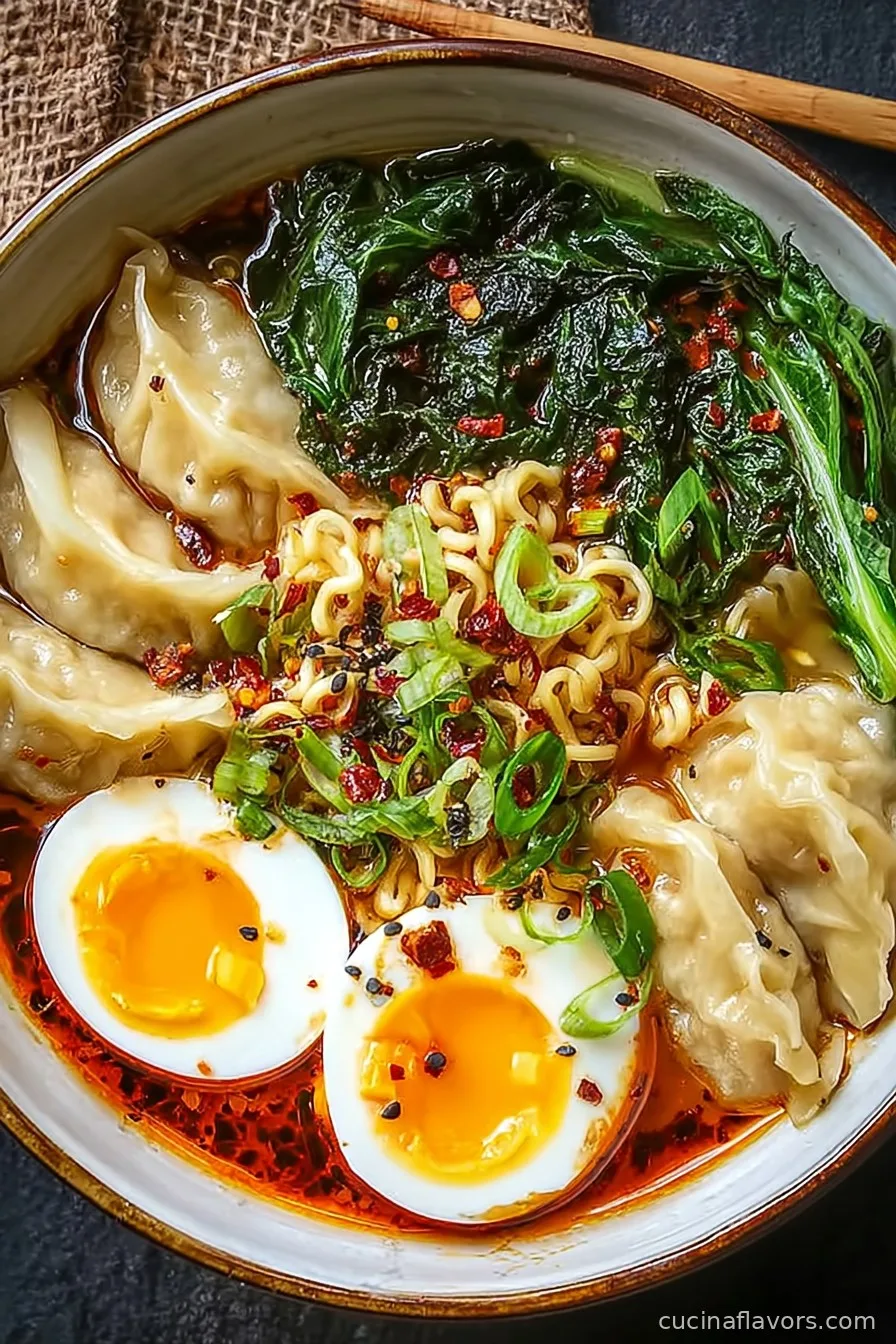
This irresistible dish draws inspiration from traditional Japanese ramen, integrating plump Asian dumplings, perfectly jammy eggs, and vibrant vegetables to create a balanced meal ideal for lunch or dinner.
Ramen, which originated in Japan but has roots in Chinese cuisine, has become a beloved global favorite due to its robust, umami-packed broth, chewy noodles, and endless options for toppings. By adding succulent dumplings, this recipe takes ramen to new heights, offering delightful texture contrasts while maintaining an authentic taste.
Whether you are a ramen enthusiast looking to experiment at home or new to the world of noodle soups, this recipe makes it easy to craft a restaurant-quality bowl in your kitchen.
The Savory Dumpling Ramen Bowl with Soft-Boiled Eggs and Fresh Greens is designed for home cooks who appreciate both comfort and nutrition in their meals.
Get ready to savor a warming, flavor-packed noodle soup that showcases the best aspects of ramen and Asian dumplings with a colorful twist of fresh greens.
Ingredients
- 8 to 10 frozen or homemade Asian-style dumplings (pork, chicken, shrimp, or vegetable)
- 4 large eggs
- 5 cups low-sodium chicken or vegetable broth
- 2 tablespoons soy sauce
- 1 tablespoon miso paste (white or yellow)
- 1 tablespoon sesame oil
- 2 teaspoons fresh ginger, grated
- 2 cloves garlic, minced
- 2 portions fresh or dried ramen noodles
- 2 cups baby spinach or mixed greens (baby bok choy, chard, or kale also work)
- 1 cup shiitake or button mushrooms, sliced
- 2 green onions, thinly sliced
- 1 medium carrot, julienned or shredded
- 1 tablespoon rice vinegar
- 1 teaspoon chili oil (optional, for heat)
- Salt and freshly ground black pepper to taste
- Toasted sesame seeds, for garnish
Instructions
- Bring a large pot of salted water to a gentle boil. Gently lower the eggs into the water and cook for exactly 6 to 7 minutes for soft-boiled consistency. Remove eggs and place them in an ice bath to stop cooking. Once cool, peel and set aside.
- Prepare the ramen noodles according to package instructions in a separate pot. Drain and set aside, lightly coating with a splash of sesame oil to prevent sticking.
- Heat the sesame oil in a large saucepan over medium heat. Add the grated ginger and minced garlic, sautéing for about 1 minute until fragrant.
- Add the sliced mushrooms and cook for another 3 minutes or until softened.
- Whisk in the chicken or vegetable broth, soy sauce, and miso paste until well combined. Bring the broth to a simmer and cook for 5 to 7 minutes to allow flavors to develop.
- While the broth simmers, prepare the dumplings. If using frozen dumplings, cook according to package instructions—usually by boiling, steaming, or pan-frying for about 4 to 6 minutes until heated through and cooked.
- Add the greens (spinach, bok choy, or chosen greens) and shredded carrots to the simmering broth. Simmer just until the vegetables are tender but still vibrant, about 2 minutes.
- Stir in rice vinegar and chili oil (if using) and season with salt and pepper to taste.
- To assemble, divide the cooked ramen noodles between serving bowls. Pour the hot broth with vegetables over the noodles.
- Top each bowl with cooked dumplings, halved soft-boiled eggs, sliced green onion, and a sprinkle of toasted sesame seeds. Serve immediately for best results.
Nutritional Information
The Savory Dumpling Ramen Bowl with Soft-Boiled Eggs and Fresh Greens is not only bursting with flavor, but also provides a well-rounded nutritional profile to support a balanced lifestyle.
A single serving typically offers a solid dose of protein, averaging between 18 to 25 grams, primarily from the eggs, dumplings, and, if using, tofu or meat in the filling.
The eggs add essential amino acids and healthy fats, including omega-3s, while the dumplings contribute additional nutrients depending on their filling, such as lean meats, seafood, or vegetables.
Fresh greens like spinach and bok choy are rich sources of vitamins A, C, and K, providing antioxidants that help combat inflammation and support immune health. The mushrooms and carrots add dietary fiber, beta-carotene, selenium, and B vitamins, making this meal even more nourishing.
With the use of low-sodium broth and controlled amounts of soy sauce and miso, the sodium content can be moderated, aiding in heart health. The ramen noodles add satisfying carbohydrates for energy, while the inclusion of sesame oil and seeds introduces heart-healthy fats and trace minerals.
Overall, this dish strikes a balance between macronutrients and micronutrients, and when prepared with a focus on fresh, high-quality ingredients, it can fit nicely into a healthy, diverse diet.

Wine and Beverage Pairings
For an authentic and harmonious meal experience, pair your Savory Dumpling Ramen Bowl with Soft-Boiled Eggs and Fresh Greens with a lightly chilled glass of sake, which complements the umami flavors in the broth.
Japanese green tea, such as genmaicha or sencha, offers a refreshing, palate-cleansing contrast to the savory and rich notes of the soup. If you prefer wine, a dry Riesling or a light-bodied Pinot Noir matches well with both the dumplings and the vibrant greens, balancing the dish's complexities.
Non-alcoholic options, such as sparkling water with a twist of yuzu or lemon, also bring a pleasant zing that refreshes between bites.
Cooking Tips and Variations
To ensure your Savory Dumpling Ramen Bowl with Soft-Boiled Eggs and Fresh Greens is the best it can be, focus on timing and ingredient quality. Boiling eggs for precisely 6 to 7 minutes guarantees jammy, golden yolks perfect for ramen. For even softer yolks, reduce boiling time to 6 minutes.
When making the broth, take care not to let it boil too vigorously after adding the miso paste, as high heat can degrade both flavor and nutrients. For a richer broth, add a dash of mirin or a piece of kombu while simmering, removing these before serving.
When choosing dumplings, you may use either pork, chicken, shrimp, or vegetarian versions, depending on your preference or dietary restrictions. Homemade dumplings allow for full ingredient control, while good-quality store-bought ones offer convenience. Consider pan-frying the dumplings for extra crispness before adding them to the bowl.
Feel free to swap out or add vegetables based on seasonality, such as napa cabbage, snap peas, or bean sprouts. You can also customize the level of spice with chili oil or a spoonful of gochujang. For a gluten-free version, select gluten-free dumplings and tamari instead of regular soy sauce.
If you want to make the meal vegan, use plant-based dumplings and omit the eggs, adding marinated tofu for protein. The components of this ramen bowl can be prepped in advance—soft boil the eggs and cook the dumplings ahead to streamline busy weeknight dinners.
Ultimately, experimenting with flavors and textures will help you create a ramen bowl ideally suited to your taste and lifestyle.

Serving Suggestions
The Savory Dumpling Ramen Bowl with Soft-Boiled Eggs and Fresh Greens is best enjoyed immediately after assembly, when all elements are piping hot and freshly cooked.
For an inviting presentation, arrange the noodles in each bowl before pouring over the steaming broth and vegetables, ensuring the dumplings and eggs are displayed prominently. Slice each soft-boiled egg in half to showcase the golden yolk, and fan out the dumplings for an appetizing visual contrast.
A scatter of thinly sliced green onions and toasted sesame seeds adds both color and flavor. Present the ramen bowls with chopsticks for the noodles and dumplings, and offer soup spoons for sipping the delicious, savory broth.
Encourage diners to stir the bowl gently to integrate the flavors before they dig in. This dish is filling on its own but can be paired with light side dishes such as a crisp cucumber salad, pickled vegetables, or kimchi for added variety and texture.
The ramen bowl is versatile enough to serve at casual family dinners or as a centerpiece for an Asian-inspired dinner party, delivering both visual appeal and comfort in every bite. With its customizability, you can scale the recipe up or down to accommodate larger groups or intimate gatherings.
For a special touch, add mini nori sheets or a drizzle of spicy chili oil as table-top garnishes, allowing everyone to personalize their bowl to taste.
Health Benefits
Enjoying a Savory Dumpling Ramen Bowl with Soft-Boiled Eggs and Fresh Greens can offer numerous health benefits, especially when crafted with fresh, high-quality ingredients. This meal provides a thoughtful balance of macronutrients—protein from eggs and dumplings, complex carbohydrates from noodles, and dietary fiber from vegetables and greens.
Soft-boiled eggs are a great source of vitamins D, B6, and B12, as well as minerals like iron and zinc, which support immune function and overall energy.
Fresh greens like spinach and bok choy bring significant amounts of antioxidants, folate, and vitamin K, helping to protect against chronic diseases and promoting healthy bones. Mushrooms deliver selenium and B vitamins, while carrots add beta-carotene, important for eye health.
By controlling the amount of sodium via low-sodium broth and soy sauce, this ramen bowl aids in maintaining healthy blood pressure. The use of sesame oil provides unsaturated fats that promote cardiovascular health.
Additionally, the meal is satisfying and may help with portion control, reducing the likelihood of unhealthy snacking later. Swapping out fried dumplings for boiled or steamed ones can further improve the nutritional profile.
Substituting gluten-free noodles or dumplings, or selecting plant-based proteins, makes this dish adaptable for those with food sensitivities or specific diet preferences. All in all, this ramen bowl offers comfort and nourishment, supporting a healthy and balanced way of eating.
Frequently Asked Questions
Absolutely. Store-bought frozen dumplings work perfectly and offer convenience. Just cook them according to the package instructions before adding to your ramen bowl.
Boil large eggs for exactly 6 to 7 minutes, then immediately transfer to an ice bath. This technique creates a firm white with a luscious, creamy yolk ideal for ramen.
Fresh ramen noodles are ideal, but dried or frozen varieties also work well. For gluten-free versions, use rice noodles or gluten-free ramen noodles.
Yes! Use vegetarian or vegan dumplings, vegetable broth, and substitute eggs with marinated tofu for a plant-based alternative.
Store broth, noodles, and toppings separately in airtight containers in the refrigerator. Assemble and reheat just before serving for best texture.
The Savory Dumpling Ramen Bowl with Soft-Boiled Eggs and Fresh Greens is a show-stopping meal that brings together the heartiness of dumplings, the satisfaction of noodles, and the vibrant nutrition of fresh greens. By blending authentic Japanese ramen with creative global twists, this recipe delivers both complex flavor and comfort in each bowl. Whether you are looking for a healthy weeknight meal or an impressive dinner for special occasions, this ramen bowl is versatile, customizable, and deeply satisfying. Try making it your own with different varieties of dumplings, toppings, and greens, and enjoy the nourishing, umami-rich result with family and friends. Once you taste this hearty, delectable dish, you'll understand why the Savory Dumpling Ramen Bowl with Soft-Boiled Eggs and Fresh Greens deserves a spot in your culinary repertoire.
Ingredients
- 8 to 10 frozen or homemade Asian-style dumplings (pork, chicken, shrimp, or vegetable)
- 4 large eggs
- 5 cups low-sodium chicken or vegetable broth
- 2 tablespoons soy sauce
- 1 tablespoon miso paste (white or yellow)
- 1 tablespoon sesame oil
- 2 teaspoons fresh ginger, grated
- 2 cloves garlic, minced
- 2 portions fresh or dried ramen noodles
- 2 cups baby spinach or mixed greens (baby bok choy, chard, or kale also work)
- 1 cup shiitake or button mushrooms, sliced
- 2 green onions, thinly sliced
- 1 medium carrot, julienned or shredded
- 1 tablespoon rice vinegar
- 1 teaspoon chili oil (optional, for heat)
- Salt and freshly ground black pepper to taste
- Toasted sesame seeds, for garnish
Instructions
-
1Bring a large pot of salted water to a gentle boil. Gently lower the eggs into the water and cook for exactly 6 to 7 minutes for soft-boiled consistency. Remove eggs and place them in an ice bath to stop cooking. Once cool, peel and set aside.
-
2Prepare the ramen noodles according to package instructions in a separate pot. Drain and set aside, lightly coating with a splash of sesame oil to prevent sticking.
-
3Heat the sesame oil in a large saucepan over medium heat. Add the grated ginger and minced garlic, sautéing for about 1 minute until fragrant.
-
4Add the sliced mushrooms and cook for another 3 minutes or until softened.
-
5Whisk in the chicken or vegetable broth, soy sauce, and miso paste until well combined. Bring the broth to a simmer and cook for 5 to 7 minutes to allow flavors to develop.
-
6While the broth simmers, prepare the dumplings. If using frozen dumplings, cook according to package instructions—usually by boiling, steaming, or pan-frying for about 4 to 6 minutes until heated through and cooked.
-
7Add the greens (spinach, bok choy, or chosen greens) and shredded carrots to the simmering broth. Simmer just until the vegetables are tender but still vibrant, about 2 minutes.
-
8Stir in rice vinegar and chili oil (if using) and season with salt and pepper to taste.
-
9To assemble, divide the cooked ramen noodles between serving bowls. Pour the hot broth with vegetables over the noodles.
-
10Top each bowl with cooked dumplings, halved soft-boiled eggs, sliced green onion, and a sprinkle of toasted sesame seeds. Serve immediately for best results.
Approximate Information for One Serving
Nutrition Disclaimers
Number of total servings shown is approximate. Actual number of servings will depend on your preferred portion sizes.
Nutritional values shown are general guidelines and reflect information for 1 serving using the ingredients listed, not including any optional ingredients. Actual macros may vary slightly depending on specific brands and types of ingredients used.
To determine the weight of one serving, prepare the recipe as instructed. Weigh the finished recipe, then divide the weight of the finished recipe (not including the weight of the container the food is in) by the desired number of servings. Result will be the weight of one serving.
Did you make this recipe?
Please consider Pinning it!


Leave a Reply