
Thai-Inspired Peanut Coconut Cauliflower Chickpea Curry is a rich and vibrant plant-based dish that celebrates the bold, unforgettable flavors of Southeast Asia. This recipe beautifully fuses the creamy and nutty essence of peanut sauce, the rich and silky texture of coconut milk, and the wholesome goodness of cauliflower and chickpeas.
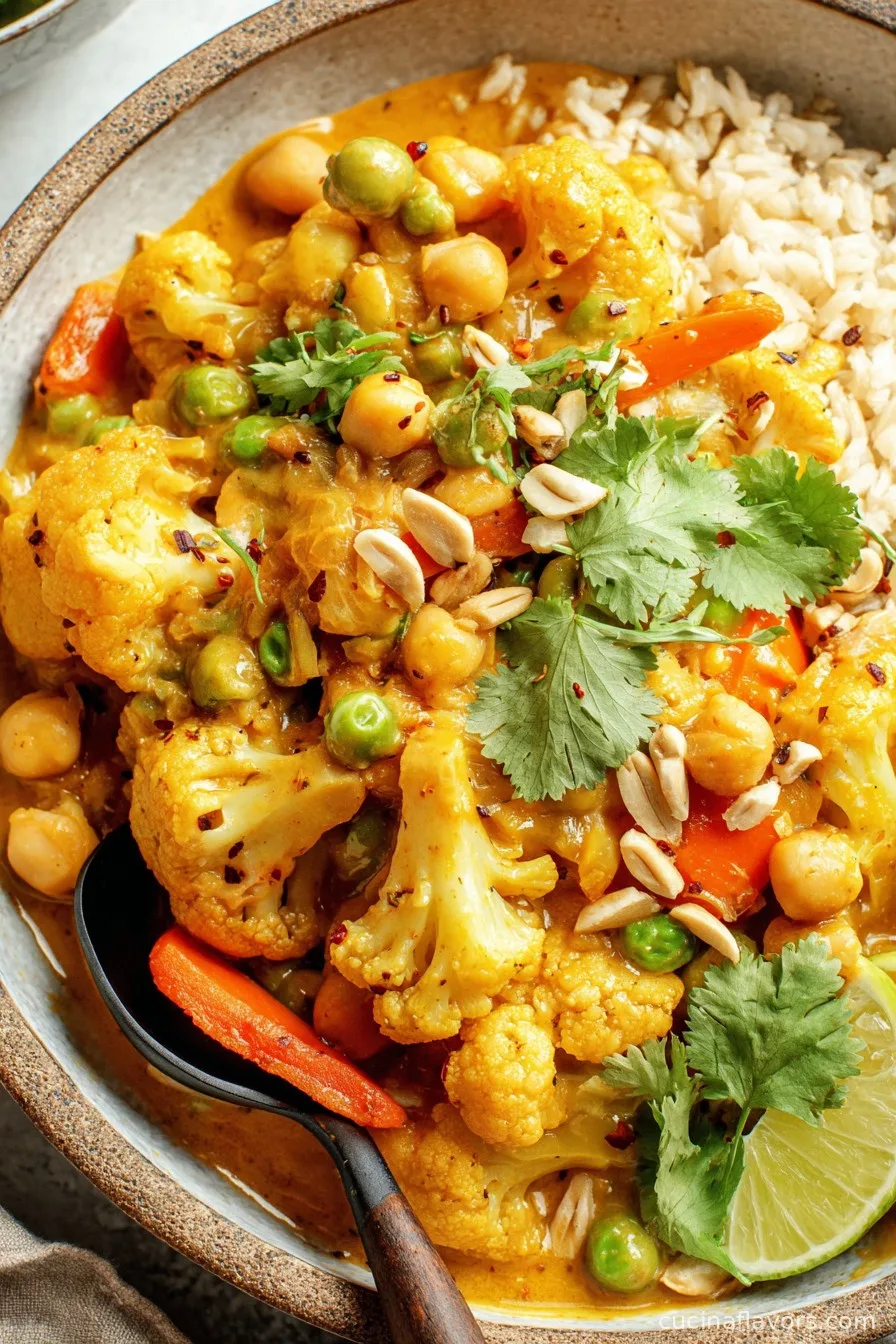
Thai curries have captivated food lovers around the globe due to their harmonious blend of sweet, spicy, savory, and tangy notes, and this vegan curry takes inspiration from that tradition while introducing new elements for a completely satisfying meal.
The combination of toasted peanuts, aromatic spices, and fresh vegetables creates a symphony of flavors in every bite. Cauliflower becomes tender yet retains a pleasant bite, while chickpeas serve as a hearty protein source, making this dish not only delicious but also filling and nourishing.
Coconut milk adds body to the sauce, enveloping each ingredient in a velvet-like embrace. Curry pastes, often considered the soul of Thai curries, bring an authentic touch, providing warmth and depth without overpowering the main stars of the dish.
Whether you crave a comforting weeknight dinner or wish to impress guests with a vibrant centerpiece, this curry offers both ease and elegance. As the popularity of plant-based meals grows, recipes like this Thai-Inspired Peanut Coconut Cauliflower Chickpea Curry stand out for their balance of taste, nutrition, and accessibility.
With simple ingredients and flexible preparation methods, home cooks at any skill level can bring the magic of Thai-inspired cuisine to their tables. Packed with color, flavor, and health benefits, this curry promises to become a new favorite, enjoyed time and again by vegans and non-vegans alike.
Ingredients
- 1 medium head of cauliflower, cut into florets
- 1 can (15 oz) chickpeas, drained and rinsed
- 1 can (13.5 oz) full-fat coconut milk
- 1 medium onion, finely chopped
- 3 cloves garlic, minced
- 1 tablespoon fresh ginger, grated
- 2 tablespoons Thai red curry paste (use vegan version if needed)
- ½ cup natural creamy peanut butter
- 2 tablespoons soy sauce or tamari
- 1 tablespoon maple syrup or brown sugar
- 1 tablespoon lime juice
- 1 large red bell pepper, sliced
- 1 cup cherry tomatoes, halved
- 1 tablespoon coconut oil or neutral oil
- 1 teaspoon ground turmeric
- ½ teaspoon ground cumin
- ½ teaspoon chili flakes (optional, for extra heat)
- ½ teaspoon salt, or to taste
- Black pepper, to taste
- Fresh cilantro, chopped, for garnish
- Roasted peanuts, chopped, for garnish
- Steamed jasmine rice or quinoa, to serve
Instructions
- Heat coconut oil in a large skillet or Dutch oven over medium heat. Add chopped onion and sauté for 3-4 minutes until softened.
- Stir in garlic and ginger, cooking for 1-2 minutes until fragrant.
- Add curry paste, turmeric, and cumin to the pan. Stir well to toast the spices and curry paste for about 2 minutes.
- Mix in cauliflower florets and red bell pepper, tossing to coat with the aromatic paste.
- Add coconut milk, peanut butter, soy sauce, maple syrup, and salt to the pan. Stir until the peanut butter is fully incorporated and the sauce is smooth.
- Gently fold in the chickpeas and cherry tomatoes. Bring the mixture to a gentle simmer.
- Cover and cook for 15-20 minutes, stirring occasionally, until the cauliflower is tender and the sauce has thickened.
- Taste and adjust seasoning with lime juice, black pepper, and additional salt if needed. Add chili flakes for extra spice if desired.
- Serve the curry hot, garnished with chopped fresh cilantro and roasted peanuts.
- Pair with steamed jasmine rice or quinoa for a complete meal.
Nutritional Information
This Thai-Inspired Peanut Coconut Cauliflower Chickpea Curry is a balanced vegan meal that caters to multiple dietary needs. Each serving provides an excellent combination of plant-based protein, fiber, healthy fats, and a variety of essential vitamins and minerals.
Cauliflower brings a hefty dose of vitamin C, vitamin K, and antioxidants, supporting immune health. Chickpeas add not only protein, making this dish satisfying for vegans and vegetarians, but also dietary fiber, which aids in digestion and helps keep you full longer.
The coconut milk is rich in medium-chain triglycerides (MCTs), contributing to heart health when consumed in moderation. Peanut butter infuses extra protein and monounsaturated fats, which help in maintaining energy and supporting brain function. The dish is naturally gluten-free if soy sauce is replaced with tamari.
With minimal added sugar and no animal products, the curry supports a balanced lifestyle without sacrificing flavor. Each generous serving, when served with rice, contains roughly 440-500 calories, 15-18g fat, 13-15g protein, and 10-12g dietary fiber. Sodium content can be managed by choosing low-sodium ingredients.
With an array of phytonutrients from colorful vegetables, this curry nourishes the body holistically.

Wine and Beverage Pairings
A Thai-Inspired Peanut Coconut Cauliflower Chickpea Curry pairs beautifully with crisp, aromatic white wines such as Riesling or Sauvignon Blanc. These wines can balance the curry's richness while complementing the subtle heat and citrus flavors.
If you prefer non-alcoholic beverages, ginger-infused iced tea or a sparkling lime soda works exceptionally well to cleanse the palate between bites. Coconut water is another excellent match, as it enhances the coconut notes in the dish and provides a cooling contrast to the spices.
For those who enjoy beer, a light, citrusy wheat beer or lager will also go well with the curry's robust flavors.
Cooking Tips and Variations
To personalize your Thai-Inspired Peanut Coconut Cauliflower Chickpea Curry, consider a few easy variations and helpful hints. While cauliflower and chickpeas form the base, you can swap or add vegetables such as sweet potatoes, carrots, or baby spinach for extra nutrients and color.
If you prefer a thicker curry, simmer uncovered for the last 5 minutes to allow the sauce to reduce further. Using light coconut milk is an excellent option if you want to cut back on calories or fat without losing the creamy texture.
Adjust the spice level by varying the quantity of red curry paste or adding sliced fresh chilies. For a crunchier texture, roast the cauliflower in the oven at 400°F for 20 minutes before adding it to the curry. Prefer a milder flavor?
Use less peanut butter or opt for almond butter for a subtle twist. If you’re preparing for meal prep, let the curry cool completely before refrigerating in airtight containers for up to 4 days; the flavors actually deepen over time, making leftovers especially delicious.
To make this curry more kid-friendly or appeal to hesitant palates, omit chili flakes and serve with a side of roti or naan. Finally, always garnish just before serving to maintain fresh flavors and a vibrant presentation.

Serving Suggestions
When it comes to serving Thai-Inspired Peanut Coconut Cauliflower Chickpea Curry, presentation and accompaniments truly elevate the experience. While this curry is a complete main course on its own, pairing it with perfectly steamed jasmine rice or fragrant basmati rice helps soak up all the luscious sauce.
For a more nutritious approach, try serving it alongside fluffy quinoa or brown rice, which will add extra fiber and minerals.
To enhance the Thai dining ritual, offer small bowls of fresh cucumber slices or shredded carrot salad on the side, which provide a cool, crunchy contrast to the curry's rich warmth. Garnish generously with chopped fresh cilantro, roasted peanuts, and a wedge of lime to brighten the flavors further.
If you are entertaining, consider setting up a curry bar, where guests can customize their plates with different toppings like scallions, toasted coconut flakes, fresh basil, or even a few sliced chilies for added kick.
For an added layer of indulgence, warm naan, roti, or even pita bread can be served to scoop up the sauce directly. This curry also makes an excellent component of a larger Thai-inspired dinner spread, accompanied by spring rolls, tangy salads, or grilled vegetables.
No matter how you serve it, be sure to dish out the curry while it's hot to make the most of its intense aroma and luxurious texture, ensuring a truly memorable meal.
Health Benefits
Thai-Inspired Peanut Coconut Cauliflower Chickpea Curry is packed with health benefits that underscore its appeal as a plant-based meal. Cauliflower contributes powerful antioxidants such as sulforaphane, known for its potential to support heart and brain health, while its high fiber content promotes digestive regularity.
Chickpeas are an exceptional source of plant-based protein, coupled with complex carbohydrates that provide steady energy and help stabilize blood sugar levels. Coconut milk offers healthy fats that are easily digestible and can enhance absorption of fat-soluble vitamins.
Peanut butter, when used in moderation, supplies monounsaturated fats and contributes to feelings of satiety, making overeating less likely. The inclusion of fresh vegetables, ginger, and garlic introduces an array of anti-inflammatory compounds, immune boosters, and phytonutrients.
The curry is naturally gluten-free and suitable for vegan and vegetarian diets, making it an inclusive dish for multiple dietary needs.
With relatively low levels of saturated fat per serving (unless consumed in excess), and minimal processed ingredients, this curry represents a well-rounded, nutritious option for anyone seeking both flavor and health on their plate.
Frequently Asked Questions
Yes, this curry freezes very well. Let it cool completely, then portion into airtight containers and freeze for up to 3 months. Thaw overnight in the refrigerator before reheating on the stove or microwave.
The spiciness depends on the brand and quantity of red curry paste used. For a milder curry, use less paste and omit any added chili flakes. You can always add more spice at the end, but it’s harder to reduce heat once it’s added.
Absolutely! This recipe is very flexible. Try adding vegetables like carrots, spinach, green beans, or sweet potatoes for different flavors and textures.
For variety, serve the curry with quinoa, millet, or warmed flatbread such as naan or roti. These alternatives work equally well to soak up the flavorful sauce.
Yes, the curry is naturally gluten-free if you use tamari instead of soy sauce. Always check the labels of your curry paste and sauces to ensure they are certified gluten-free if needed.
Thai-Inspired Peanut Coconut Cauliflower Chickpea Curry beautifully exemplifies how vibrant Thai-inspired flavors can be brought to life using wholesome, plant-based ingredients. Easy to prepare and endlessly customizable, the curry delivers layers of flavor and nutrition, making it a standout choice whether you are seeking a comforting weeknight dinner, a showstopper for guests, or an avenue to eat more vegetables in delicious style. Aromatic, nutty, and beautifully spiced, each spoonful brings a taste of Southeast Asia into your home kitchen. With its focus on accessibility and inclusivity, this dish is sure to earn a regular spot at your table. Explore, experiment, and savor every bite of this remarkable curry!
Ingredients
- 1 medium head of cauliflower, cut into florets
- 1 can (15 oz) chickpeas, drained and rinsed
- 1 can (13.5 oz) full-fat coconut milk
- 1 medium onion, finely chopped
- 3 cloves garlic, minced
- 1 tablespoon fresh ginger, grated
- 2 tablespoons Thai red curry paste (use vegan version if needed)
- ½ cup natural creamy peanut butter
- 2 tablespoons soy sauce or tamari
- 1 tablespoon maple syrup or brown sugar
- 1 tablespoon lime juice
- 1 large red bell pepper, sliced
- 1 cup cherry tomatoes, halved
- 1 tablespoon coconut oil or neutral oil
- 1 teaspoon ground turmeric
- ½ teaspoon ground cumin
- ½ teaspoon chili flakes (optional, for extra heat)
- ½ teaspoon salt, or to taste
- Black pepper, to taste
- Fresh cilantro, chopped, for garnish
- Roasted peanuts, chopped, for garnish
- Steamed jasmine rice or quinoa, to serve
Instructions
-
1Heat coconut oil in a large skillet or Dutch oven over medium heat. Add chopped onion and sauté for 3-4 minutes until softened.
-
2Stir in garlic and ginger, cooking for 1-2 minutes until fragrant.
-
3Add curry paste, turmeric, and cumin to the pan. Stir well to toast the spices and curry paste for about 2 minutes.
-
4Mix in cauliflower florets and red bell pepper, tossing to coat with the aromatic paste.
-
5Add coconut milk, peanut butter, soy sauce, maple syrup, and salt to the pan. Stir until the peanut butter is fully incorporated and the sauce is smooth.
-
6Gently fold in the chickpeas and cherry tomatoes. Bring the mixture to a gentle simmer.
-
7Cover and cook for 15-20 minutes, stirring occasionally, until the cauliflower is tender and the sauce has thickened.
-
8Taste and adjust seasoning with lime juice, black pepper, and additional salt if needed. Add chili flakes for extra spice if desired.
-
9Serve the curry hot, garnished with chopped fresh cilantro and roasted peanuts.
-
10Pair with steamed jasmine rice or quinoa for a complete meal.
Approximate Information for One Serving
Nutrition Disclaimers
Number of total servings shown is approximate. Actual number of servings will depend on your preferred portion sizes.
Nutritional values shown are general guidelines and reflect information for 1 serving using the ingredients listed, not including any optional ingredients. Actual macros may vary slightly depending on specific brands and types of ingredients used.
To determine the weight of one serving, prepare the recipe as instructed. Weigh the finished recipe, then divide the weight of the finished recipe (not including the weight of the container the food is in) by the desired number of servings. Result will be the weight of one serving.
Did you make this recipe?
Please consider Pinning it!

Leave a Reply