
Strawberry Mochi Recipe is a delightful Japanese confection that combines chewy, tender mochi with a sweet, fruity strawberry center. Known as Ichigo Daifuku in Japan, this charming treat has won the hearts of food lovers around the world for its irresistible texture and burst of fresh fruit flavor.
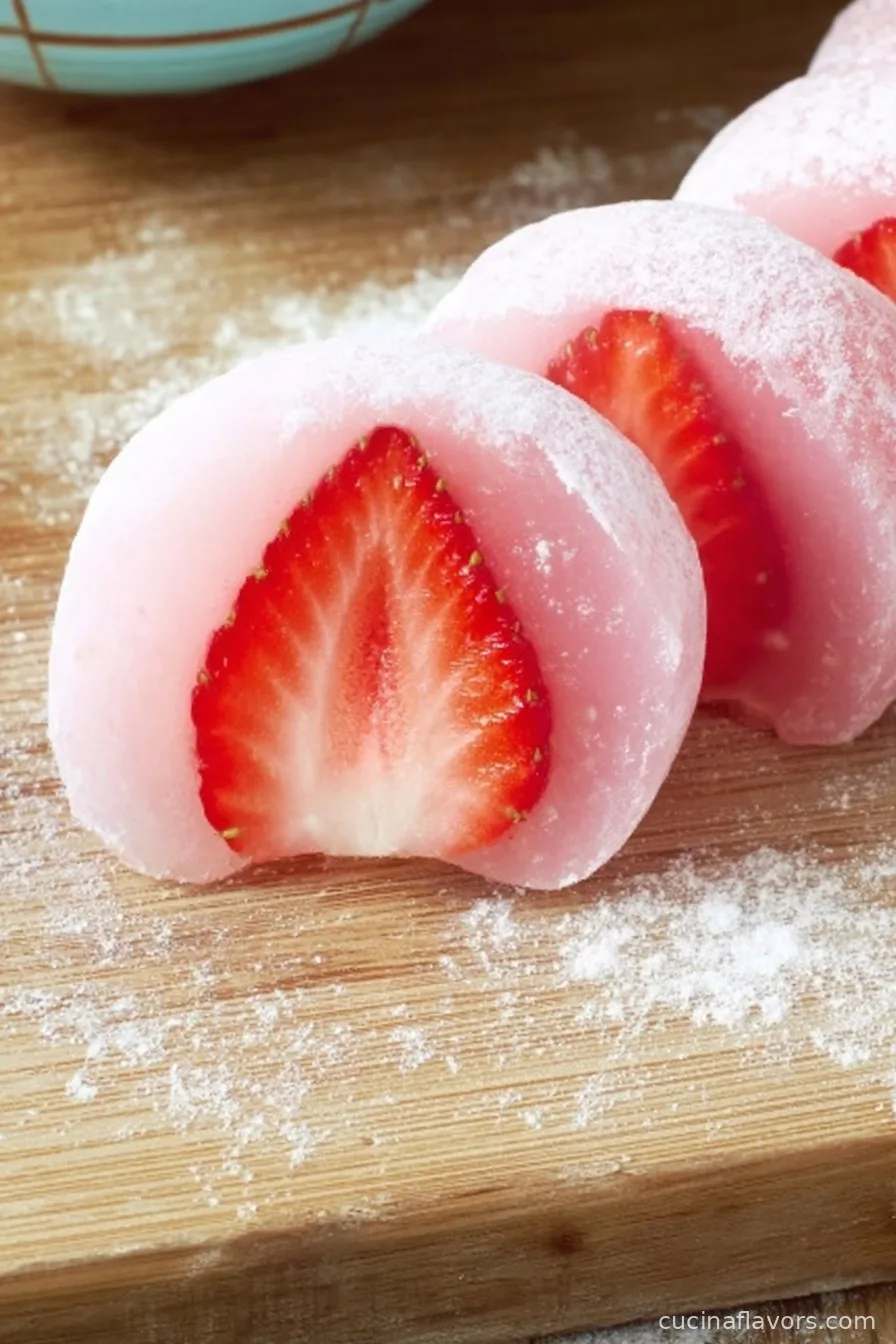
Mochi itself has a fascinating history, dating back centuries in Japan, where it was traditionally made for celebrations and special occasions.
By wrapping a ripe strawberry and a portion of sweet bean paste in a layer of soft, glutinous rice cake, Strawberry Mochi Recipe brings together heritage and innovation in a single bite.
Its delicate appearance and vibrant colors make it an ideal dessert for spring festivals, tea parties, or simply indulging in a homemade treat.
Today, Strawberry Mochi is enjoyed internationally as people embrace Asian-inspired desserts at home, and its easy adaptability has led to creative variations such as matcha mochi or chocolate-dipped versions.
Whether you’re a fan of Japanese sweets, seeking gluten-free dessert ideas, or looking to impress guests with a colorful dessert, learning how to make Strawberry Mochi at home is sure to bring a taste of Japan to your kitchen.
Now, let’s explore how you can craft this beloved treat from scratch with simple ingredients and clear instructions.
Ingredients
- 10 fresh strawberries, hulled and dried
- 200 grams (about 1 cup) glutinous rice flour (sweet rice flour, mochiko)
- 120 grams (about ⅔ cup) granulated sugar
- 240 ml (1 cup) water
- 200 grams (about 7 oz) sweet red bean paste (anko or tsubuan)
- Potato or cornstarch, for dusting
- Optional: a pinch of salt
Instructions
- Wash and hull the strawberries. Gently pat them dry with a paper towel and set aside.
- Divide the sweet red bean paste into 10 equal portions. Flatten each portion and wrap it around a strawberry, leaving the tip exposed if desired. Set the wrapped strawberries aside.
- In a heatproof bowl, whisk together glutinous rice flour, sugar, and a pinch of salt (if using). Gradually add water while stirring until a smooth batter forms.
- Cover the bowl loosely with plastic wrap or a microwave-safe plate. Microwave on high for 2 minutes. Stir the mixture, then microwave for another 1-2 minutes until the dough becomes translucent and sticky.
- Alternatively, steam the mixture over high heat for 15-20 minutes, stirring halfway through, if you prefer not to use a microwave.
- Sift a generous amount of potato or cornstarch onto a clean work surface. Transfer the cooked mochi dough onto the starch and let it cool for a few minutes.
- Once manageable, divide the mochi dough into 10 equal pieces. Flatten each piece into a round disc about 3-4 inches in diameter.
- Place a strawberry (bean paste covered side down) onto the center of the mochi disc. Carefully wrap the dough around the strawberry, pinching the edges to seal. Roll gently in your hands to form a smooth ball.
- Dust the finished mochi with additional starch to prevent sticking. Repeat the process for the remaining strawberries.
- Serve immediately for the softest texture, or refrigerate in an airtight container for up to 24 hours. Enjoy!
Nutritional Information
Each piece of Strawberry Mochi contains approximately 120-140 calories, depending on the size of the strawberries and red bean paste portions used. The main macronutrients in this recipe include carbohydrates from glutinous rice flour and sugar, making each mochi ball a quick source of energy.
Fresh strawberries provide natural vitamin C, antioxidants, and dietary fiber, while red bean paste offers small amounts of protein and dietary minerals like iron and potassium.
Compared to conventional desserts that often include heavy cream or butter, Strawberry Mochi is relatively light and lower in fats, containing less than 1 gram of fat per serving.
Since there is no use of dairy, this dessert is suitable for those with lactose intolerance, and it's naturally gluten-free thanks to the glutinous rice flour. However, moderation is recommended for those monitoring blood sugar, as the dessert is sweetened.
For a lighter version, you can reduce the sugar amount or use alternative sweeteners. Overall, Strawberry Mochi is a dessert that combines the wholesomeness of fresh fruit with the chewy satisfaction of traditional Japanese rice confections, making it a unique, health-conscious choice for your sweet cravings.
Wine and Beverage Pairings
Strawberry Mochi pairs perfectly with a variety of beverages. For an authentic Japanese touch, serve with hot matcha green tea or a delicate sencha to complement the subtle sweetness of the mochi and the freshness of strawberries.
Sparkling sake or mild white wines, such as Riesling or Moscato, also make delightful pairings for those seeking an elegant dessert experience. Non-alcoholic choices like jasmine tea, barley tea (mugicha), or a light fruit soda provide refreshing contrast to the chewy mochi and fruity filling.
The balance of flavors from these beverages enhances the enjoyment of each bite, making Strawberry Mochi a versatile dessert that fits any occasion.
Cooking Tips and Variations
For the best Strawberry Mochi, use the freshest and ripest strawberries available to achieve a juicy, flavorful filling. Make sure strawberries are completely dry before assembling to prevent the mochi dough from becoming slippery.
If you find the mochi dough too sticky, increase the amount of starch on your hands and work surface—potato starch works best, but cornstarch is a suitable alternative. Adjust the sweetness level by using less sugar in the dough or by selecting unsweetened or low-sugar red bean paste.
If red bean paste is not your favorite, try alternative fillings such as sweet white bean paste (shiro-an), Nutella, or even whipped cream for a fusion twist. Matcha green tea powder can be blended into the rice flour for an earthy flavor and vibrant color mix.
For a vegan option, ensure all ingredients, especially the bean paste, are plant-based. When using a microwave, cooking times may vary, so keep an eye on the texture and stop once the mixture turns shiny and translucent.
Work quickly when shaping and wrapping mochi as the dough is easier to handle while warm. Lastly, try forming mini mochi balls for bite-sized snacks perfect for parties or sharing with friends.
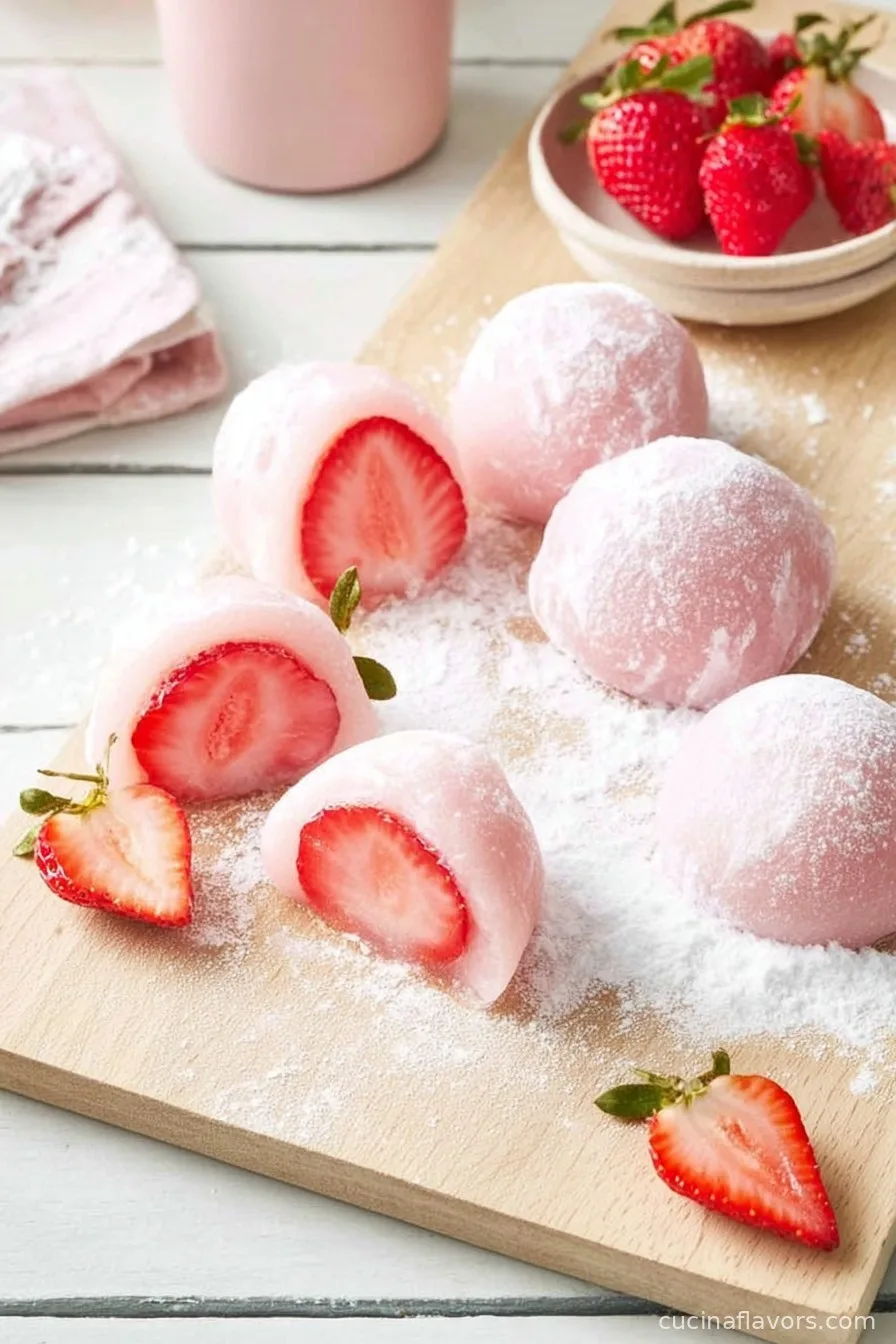
Serving Suggestions
Strawberry Mochi is best enjoyed fresh, ideally within hours of preparation, to fully appreciate its soft, chewy texture and the vibrant flavor of strawberries.
Arrange the mochi balls on a traditional Japanese serving plate or a modern platter, and dust lightly with additional potato or cornstarch or even a touch of confectioner's sugar for visual appeal.
For special gatherings, try garnishing the serving plate with edible flowers or mint sprigs to create an elegant presentation. Strawberry Mochi makes a wonderful ending to sushi nights, bento lunches, or garden teas.
They can also be packaged in decorative paper cups or wrapped individually with food-safe wrap for edible gifts. If serving at parties or picnics, consider keeping the mochi cool to preserve freshness. For a fusion presentation, serve alongside other Asian desserts like mango pudding or green tea ice cream.
The contrast between the chewy rice cake and juicy fruit makes each mochi an enticing treat, sparking conversation and delight at any event. Children and adults alike will love the playful nature of this dessert, making it a family-friendly option as well.
For extra flair, drizzle with melted chocolate or sprinkle with matcha powder just before serving.
Health Benefits
Strawberry Mochi Recipe offers several healthful benefits, making it a more mindful dessert choice. Glutinous rice flour, while primarily a source of carbohydrates, is naturally gluten-free, accommodating those with gluten sensitivities or celiac disease.
Strawberries are rich in vitamin C, which strengthens immunity, boosts skin health, and provides antioxidants that help protect cells from damage. Red bean paste is a source of plant-based protein, iron, and dietary fiber, which supports digestive health.
Compared to heavy, cream-laden Western desserts, Strawberry Mochi is relatively low in fat and devoid of cholesterol, making it heart-friendly when consumed in moderation. The dessert's natural sweetness satisfies sugar cravings in smaller portions and can be adjusted by choosing less-sweet bean paste or reducing added sugar.
With its use of simple, whole ingredients, this treat is suitable for a variety of dietary lifestyles, and homemade preparation allows for full control over ingredient quality. Remember to enjoy Strawberry Mochi as part of a balanced diet, paired with fruits and healthy beverages, for the best health outcomes.
Frequently Asked Questions
Yes, Strawberry Mochi can be made up to 24 hours in advance. Store it in an airtight container in the refrigerator, but for the best texture and flavor, allow it to come to room temperature before serving.
If you do not have a microwave, you can steam the mochi dough over high heat for about 15-20 minutes, stirring once in between until it becomes translucent and sticky.
Freezing is not generally recommended for Strawberry Mochi, as fresh strawberries can become mushy after thawing, altering the texture. It's best enjoyed fresh or within a day.
Absolutely! Besides red bean paste, you can use white bean paste, chocolate spreads, or even almond butter. Get creative with your favorite flavors.
No, Strawberry Mochi uses glutinous rice flour, which is gluten-free and safe for those with gluten sensitivities.
Making Strawberry Mochi Recipe at home is a rewarding culinary experience that combines simple ingredients with traditional Japanese techniques to create a delightful dessert loved by all ages. With just a few steps, you can enjoy the contrasting textures of chewy mochi and juicy strawberries, perfectly complemented by sweet red bean paste. Whether you serve it at celebrations, as a treat for afternoon tea, or as a special homemade gift, this recipe brings a touch of Japanese charm to any occasion. Experiment with fillings and presentation to suit your tastes, and enjoy the process of crafting this visually stunning and health-conscious dessert. Embrace the Strawberry Mochi Recipe as a staple in your dessert repertoire, and share the joy of these delectable treats with family and friends.
Ingredients
- 10 fresh strawberries, hulled and dried
- 200 grams (about 1 cup) glutinous rice flour (sweet rice flour, mochiko)
- 120 grams (about ⅔ cup) granulated sugar
- 240 ml (1 cup) water
- 200 grams (about 7 oz) sweet red bean paste (anko or tsubuan)
- Potato or cornstarch, for dusting
- Optional: a pinch of salt
Instructions
-
1Wash and hull the strawberries. Gently pat them dry with a paper towel and set aside.
-
2Divide the sweet red bean paste into 10 equal portions. Flatten each portion and wrap it around a strawberry, leaving the tip exposed if desired. Set the wrapped strawberries aside.
-
3In a heatproof bowl, whisk together glutinous rice flour, sugar, and a pinch of salt (if using). Gradually add water while stirring until a smooth batter forms.
-
4Cover the bowl loosely with plastic wrap or a microwave-safe plate. Microwave on high for 2 minutes. Stir the mixture, then microwave for another 1-2 minutes until the dough becomes translucent and sticky.
-
5Alternatively, steam the mixture over high heat for 15-20 minutes, stirring halfway through, if you prefer not to use a microwave.
-
6Sift a generous amount of potato or cornstarch onto a clean work surface. Transfer the cooked mochi dough onto the starch and let it cool for a few minutes.
-
7Once manageable, divide the mochi dough into 10 equal pieces. Flatten each piece into a round disc about 3-4 inches in diameter.
-
8Place a strawberry (bean paste covered side down) onto the center of the mochi disc. Carefully wrap the dough around the strawberry, pinching the edges to seal. Roll gently in your hands to form a smooth ball.
-
9Dust the finished mochi with additional starch to prevent sticking. Repeat the process for the remaining strawberries.
-
10Serve immediately for the softest texture, or refrigerate in an airtight container for up to 24 hours. Enjoy!
Approximate Information for One Serving
Nutrition Disclaimers
Number of total servings shown is approximate. Actual number of servings will depend on your preferred portion sizes.
Nutritional values shown are general guidelines and reflect information for 1 serving using the ingredients listed, not including any optional ingredients. Actual macros may vary slightly depending on specific brands and types of ingredients used.
To determine the weight of one serving, prepare the recipe as instructed. Weigh the finished recipe, then divide the weight of the finished recipe (not including the weight of the container the food is in) by the desired number of servings. Result will be the weight of one serving.
Did you make this recipe?
Please consider Pinning it!



Leave a Reply