
Peanut Chicken Wraps are a vibrant, satisfying, and delicious dish that has taken center stage in modern kitchens around the globe. Combining tender pieces of chicken, crisp vegetables, and a rich, savory peanut sauce all enveloped in a soft tortilla wrap, this recipe draws inspiration from Thailand’s multifaceted cuisine.
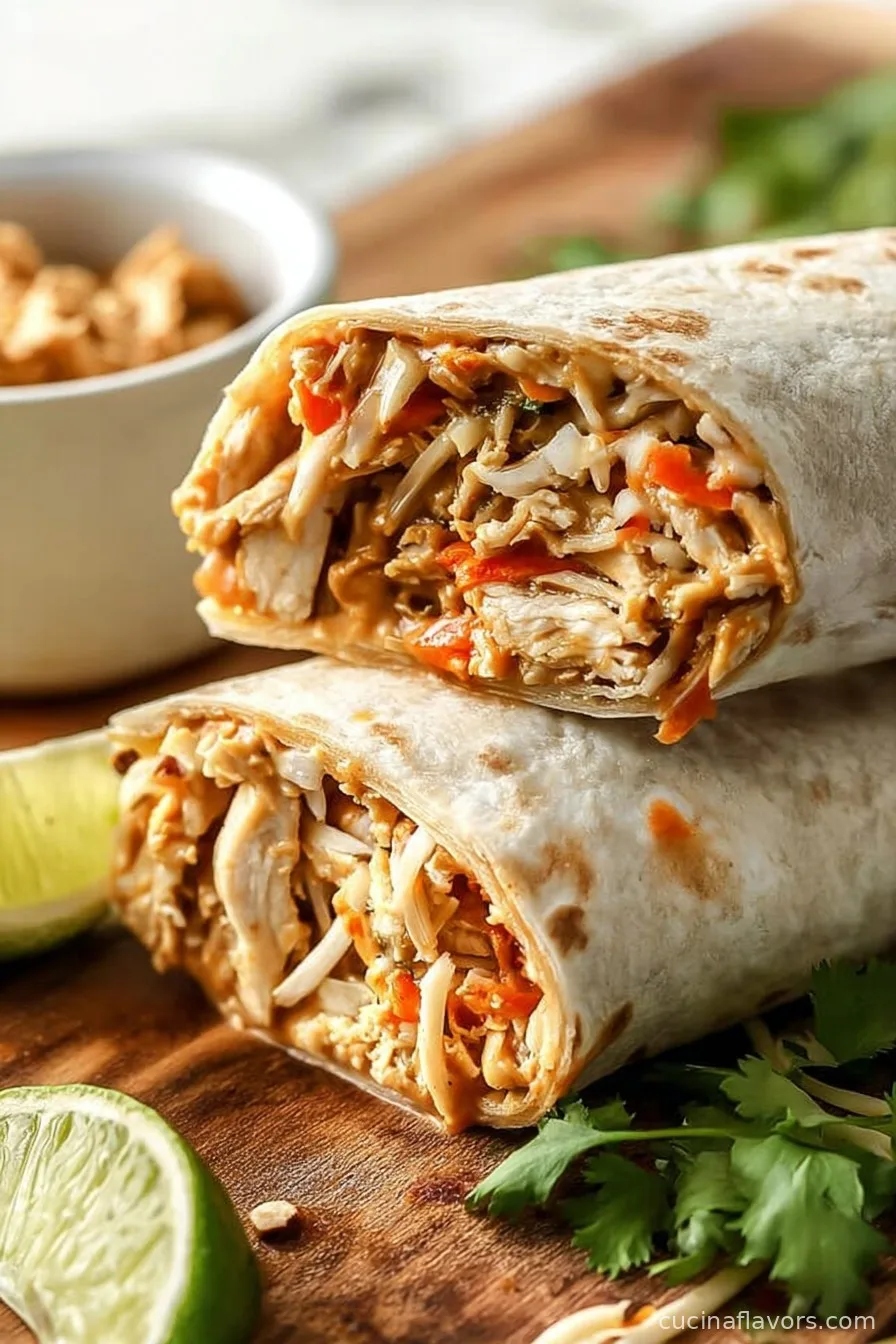
The combination of lean protein and intensely flavorful peanut sauce not only offers great taste but also presents a wonderful experience for your palate. Wraps have become a go-to meal for people seeking quick, tasty, and portable lunches or dinners, thanks to their convenience and adaptability.
Over the years, the concept of the wrap evolved from simple burritos and sandwiches and began to incorporate a variety of cultural flavors. Thai-inspired Peanut Chicken Wraps ingeniously marry the familiarity of classic chicken wraps with the robust essence of Southeast Asian cuisine.
These wraps are perfect for busy families, meal preppers, or anyone seeking an affordable yet gourmet lunch at home. Whether you are looking to introduce more global flavors into your weekly rotation or want a healthy, protein-packed meal, Peanut Chicken Wraps are sure to impress.
Let’s dive deep into the origins, key ingredients, and essential steps to mastering this scrumptious recipe.
Ingredients
- 2 boneless, skinless chicken breasts
- 1 tablespoon olive oil
- 1 teaspoon salt
- ½ teaspoon ground black pepper
- 1 teaspoon garlic powder
- ½ teaspoon ground ginger
- 1 cup shredded carrots
- 1 cup thinly sliced red bell pepper
- 1 cup sliced cucumber (optional)
- 2 cups mixed greens (such as romaine or spinach)
- 4 large whole-wheat or flour tortillas
- ½ cup roasted peanuts, chopped
- ¼ cup fresh cilantro leaves
- 2 teaspoons sesame seeds (optional)
- For the peanut sauce:
- ⅓ cup creamy peanut butter
- 2 tablespoons soy sauce (or tamari for gluten-free)
- 1 tablespoon honey or maple syrup
- 1 tablespoon rice vinegar
- 1 tablespoon fresh lime juice
- 1 teaspoon Sriracha or hot sauce (adjust to taste)
- 2 cloves garlic, minced
- 2 teaspoons grated fresh ginger
- 2-3 tablespoons warm water (to thin sauce)
Instructions
- Begin by preparing the peanut sauce: In a medium bowl, combine peanut butter, soy sauce, honey, rice vinegar, lime juice, Sriracha, minced garlic, ginger, and 2 tablespoons of warm water. Whisk until smooth. Adjust consistency by adding more water if desired. Set aside.
- Season chicken breasts on both sides with olive oil, salt, pepper, garlic powder, and ground ginger.
- Heat a non-stick skillet over medium-high heat. Add seasoned chicken breasts to the skillet and cook for 5-6 minutes on each side, or until thoroughly cooked and golden brown. Remove from the pan and allow to rest for a few minutes.
- Slice the cooked chicken into thin strips or bite-sized pieces.
- Lay each tortilla flat and spread a generous tablespoon of peanut sauce over the center.
- Layer mixed greens, chicken strips, shredded carrots, sliced bell pepper, and cucumber on top.
- Drizzle additional peanut sauce over the fillings, then sprinkle with chopped peanuts, cilantro, and sesame seeds.
- Fold the sides of the tortilla in, then roll up tightly from the bottom to encase the filling firmly.
- Slice each wrap in half if desired, and serve immediately or wrap tightly in parchment paper for meal prep.
Nutritional Information
Peanut Chicken Wraps provide a balanced blend of macronutrients that make them an excellent option for a wholesome meal. Each serving typically contains around 400-500 calories, depending on the amount of sauce and fillings used.
The lean chicken breast offers a high-quality source of protein, essential for muscle repair and growth, with each wrap containing approximately 28-32 grams of protein. Whole-wheat tortillas add complex carbohydrates and fiber, keeping you fuller for longer and supporting digestive health.
The vibrant array of vegetables contributes important vitamins such as vitamin A (from carrots and bell peppers), vitamin C (from greens and bell peppers), and potassium. Peanuts and peanut butter, the stars of the sauce, supply healthy monounsaturated fats, which may promote heart health and provide lasting energy.
The sauce also brings a moderate amount of sodium, so those watching salt intake might opt for reduced-sodium soy sauce.
On average, each wrap contains about 18-22 grams of fat, most of which are healthy fats from nuts and olive oil, and a modest amount of carbohydrates (approximately 38-45 grams per wrap).
This dish is especially well-suited for active individuals, meal preppers, and families seeking a nutritious, balanced meal that satisfies hunger and supports overall wellness. The inclusion of raw vegetables not only boosts the fiber and antioxidant content but also adds satisfying crunch and freshness.
For those with specific dietary needs, adaptations can be made to make the wraps gluten-free, lower calorie, or higher in fiber, making Peanut Chicken Wraps a versatile and health-forward choice.
Wine and Beverage Pairings
Peanut Chicken Wraps feature the bold flavors of Southeast Asian cuisine, so it’s wise to choose beverages that either complement the subtle spice or refresh the palate.
For a wine pairing, consider an off-dry Riesling or a lightly sweet Gewürztraminer, both of which balance the heat and highlight the peanut sauce’s richness. Sauvignon Blanc, known for its crisp acidity, is also a solid choice with these wraps, especially if you use extra fresh herbs.
For non-alcoholic options, classic Thai iced tea or a citrusy homemade lemonade adds a lovely counterpoint to the savory flavors. Sparkling water infused with lime or cucumber makes for a hydrating and refreshing accompaniment.
If serving with beer, choose a light lager or wheat beer; their gentle flavors won’t overpower the dish. The right beverage elevates the entire dining experience, enhancing the unique peanut and spice notes found in Peanut Chicken Wraps.
Cooking Tips and Variations
There are several ways to customize Peanut Chicken Wraps to suit different tastes or dietary requirements. For a spicy kick, add extra Sriracha or sliced fresh chilies to the sauce or sprinkle them directly onto the filling. Substitute grilled or rotisserie chicken for pan-seared chicken if short on time.
To make this meal vegetarian, swap out the chicken for crispy tofu, chickpeas, or tempeh, ensuring a delicious and satisfying meatless option. Whole-wheat tortillas are a healthful choice, but gluten-free wraps or collard green leaves work just as well for those with gluten sensitivities.
Adding sliced avocado brings creamy texture and heart-healthy fats, while shredded purple cabbage lends vibrant color and increased fiber content. If meal prepping, store the components separately (chicken, vegetables, sauce, and tortillas) to maintain freshness and prevent sogginess; assemble wraps when ready to eat.
Leftover peanut sauce is excellent as a dip for veggies or tossed with noodles for a quick side dish. You can also experiment with other protein sources, such as turkey, shrimp, or grilled steak.
Take the wraps to the next level by heating them in a panini press for a warm, toasted crunch. The versatility of Peanut Chicken Wraps makes them a favorite for picky eaters and adventurous foodies alike.
Don't be afraid to mix in your preferred herbs, such as Thai basil or mint, or top with a squeeze of fresh lime for a zesty finish. To lighten up the wraps, use yogurt-based or low-calorie alternatives for the sauce and fill with extra greens and fresh veggies.
These tips will ensure your Peanut Chicken Wraps are never boring and always tailored to your preferences.

Serving Suggestions
Peanut Chicken Wraps can be enjoyed as a portable lunch, a light dinner, or as part of a larger weekend brunch spread. For casual dining, serve the wraps halved on a platter alongside a small bowl of extra peanut sauce for dipping.
A side of crunchy vegetable slaw or a light cucumber salad wonderfully complements the rich flavors and adds an extra dimension of freshness. If preparing wraps for a party, slice them into bite-sized pieces and secure with toothpicks for a visually appealing, shareable appetizer.
For outdoor gatherings, pack the wraps in wax paper or foil and include a small thermos of iced herbal tea to round out a wholesome picnic meal. Consider pairing the wraps with a simple coconut rice bowl or sweet potato fries for a complete dinner.
To brighten up the plate, garnish with lime wedges, additional cilantro, or a sprinkle of crushed roasted peanuts. When serving to children or picky eaters, keep sauces on the side so guests can customize each bite.
To maintain the best texture, assemble wraps just before serving to prevent tortillas from getting soggy. Whether enjoyed hot, cold, or at room temperature, Peanut Chicken Wraps are adaptable and always satisfying, making them perfect for busy weeknights, lunchboxes, or relaxed weekend meals.
Health Benefits
Peanut Chicken Wraps are not just flavorful, they also provide notable health advantages. The grilled or pan-cooked chicken serves as a great source of lean protein, crucial for tissue repair, immune function, and supporting metabolic health.
Using whole-wheat tortillas over traditional flour ones increases the fiber content, aiding in digestion and blood sugar regulation. The inclusion of a colorful array of vegetables boosts the wraps with antioxidants, vitamins A and C, and essential minerals that enhance immune defense and skin health.
Peanuts and peanut butter provide beneficial monounsaturated fats, which have been linked to reduced risk of cardiovascular diseases when consumed as part of a balanced diet. Moreover, the presence of ginger and garlic in the sauce offers anti-inflammatory properties as well as a flavor boost.
For those managing their caloric intake, the ingredients can be modified—use less sauce, add more greens, or opt for lighter tortillas. Those on gluten-free diets can substitute rice paper or gluten-free wraps without sacrificing taste.
The ability to adapt Peanut Chicken Wraps to nearly any dietary plan makes them a practical choice for families and individuals seeking health-conscious meal solutions. When balanced with a side of fresh fruit or a light soup, these wraps deliver both nutrition and satiety in every bite.
Frequently Asked Questions
Yes, Peanut Chicken Wraps are excellent for meal prep. Store the components separately and assemble just before eating to maintain optimal freshness and prevent the wraps from becoming soggy.
Absolutely. Try tofu, shrimp, turkey, or even lean beef as a substitute. Adjust cooking times as needed, and ensure the chosen protein is well-seasoned before assembling the wraps.
To make these wraps gluten-free, opt for gluten-free tortillas, rice paper, or large lettuce leaves. Use tamari instead of soy sauce in the peanut sauce.
Wrap unassembled components in airtight containers: keep chicken, veggies, sauce, and tortillas separate in the refrigerator for up to 3-4 days. Assemble wraps when ready to eat.
The heat level is adjustable. The peanut sauce contains Sriracha, but you can add more for extra spice or omit it entirely for a mild flavor.
Peanut Chicken Wraps blend convenience, taste, and nutrition into a handheld meal perfect for any occasion. Ideal for lunches, dinners, or meal prep, their versatility allows you to mix and match ingredients according to your preferences or dietary needs. The combination of juicy chicken, crisp vegetables, and creamy peanut sauce captures the best of global flavors while maintaining a straightforward preparation method. Whether you are new to international cuisine or a seasoned foodie, these wraps offer a healthful, comforting option that never fails to satisfy. Enjoy experimenting with different garnishes, fillings, and serving styles, and make Peanut Chicken Wraps a staple in your weekly menu for an easy, crowd-pleasing recipe.
Ingredients
- 2 boneless, skinless chicken breasts
- 1 tablespoon olive oil
- 1 teaspoon salt
- ½ teaspoon ground black pepper
- 1 teaspoon garlic powder
- ½ teaspoon ground ginger
- 1 cup shredded carrots
- 1 cup thinly sliced red bell pepper
- 1 cup sliced cucumber (optional)
- 2 cups mixed greens (such as romaine or spinach)
- 4 large whole-wheat or flour tortillas
- ½ cup roasted peanuts, chopped
- ¼ cup fresh cilantro leaves
- 2 teaspoons sesame seeds (optional)
- For the peanut sauce:
- ⅓ cup creamy peanut butter
- 2 tablespoons soy sauce (or tamari for gluten-free)
- 1 tablespoon honey or maple syrup
- 1 tablespoon rice vinegar
- 1 tablespoon fresh lime juice
- 1 teaspoon Sriracha or hot sauce (adjust to taste)
- 2 cloves garlic, minced
- 2 teaspoons grated fresh ginger
- 2-3 tablespoons warm water (to thin sauce)
Instructions
-
1Begin by preparing the peanut sauce: In a medium bowl, combine peanut butter, soy sauce, honey, rice vinegar, lime juice, Sriracha, minced garlic, ginger, and 2 tablespoons of warm water. Whisk until smooth. Adjust consistency by adding more water if desired. Set aside.
-
2Season chicken breasts on both sides with olive oil, salt, pepper, garlic powder, and ground ginger.
-
3Heat a non-stick skillet over medium-high heat. Add seasoned chicken breasts to the skillet and cook for 5-6 minutes on each side, or until thoroughly cooked and golden brown. Remove from the pan and allow to rest for a few minutes.
-
4Slice the cooked chicken into thin strips or bite-sized pieces.
-
5Lay each tortilla flat and spread a generous tablespoon of peanut sauce over the center.
-
6Layer mixed greens, chicken strips, shredded carrots, sliced bell pepper, and cucumber on top.
-
7Drizzle additional peanut sauce over the fillings, then sprinkle with chopped peanuts, cilantro, and sesame seeds.
-
8Fold the sides of the tortilla in, then roll up tightly from the bottom to encase the filling firmly.
-
9Slice each wrap in half if desired, and serve immediately or wrap tightly in parchment paper for meal prep.
Approximate Information for One Serving
Nutrition Disclaimers
Number of total servings shown is approximate. Actual number of servings will depend on your preferred portion sizes.
Nutritional values shown are general guidelines and reflect information for 1 serving using the ingredients listed, not including any optional ingredients. Actual macros may vary slightly depending on specific brands and types of ingredients used.
To determine the weight of one serving, prepare the recipe as instructed. Weigh the finished recipe, then divide the weight of the finished recipe (not including the weight of the container the food is in) by the desired number of servings. Result will be the weight of one serving.
Did you make this recipe?
Please consider Pinning it!
Leave a Reply