
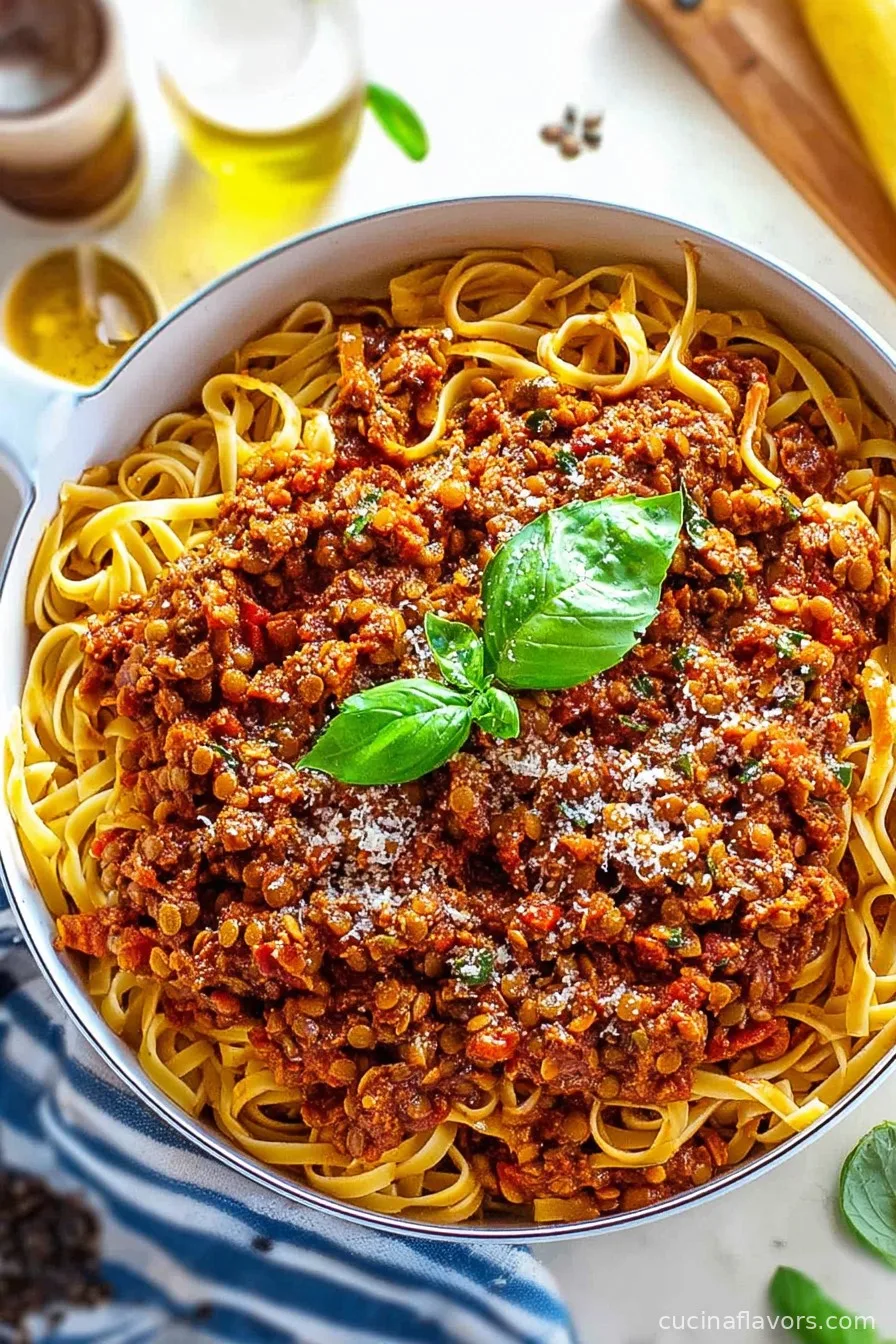
High Protein Lentil Bolognese is a delicious, heart-healthy twist on the classic Italian comfort food that has historically been a favorite among pasta lovers.
Traditionally, Bolognese sauce originated in Bologna, Italy, where it was typically prepared with a mixture of ground meats, tomatoes, and an aromatic trio of onions, carrots, and celery.
As plant-based diets and the demand for vegetarian and vegan alternatives have grown, innovative cooks began crafting meatless versions using protein-rich legumes, with lentils taking center stage. Lentils – small but mighty legumes – mimic the robust texture of minced meat while delivering exceptional nutritional value.
High Protein Lentil Bolognese is a testament to how traditional recipes can be enjoyed in a healthier, more sustainable way.
This updated take is not only rich in satisfying umami flavors but also loaded with plant-based protein, making it an ideal option for vegetarians, vegans, athletes, and anyone seeking a hearty meal that supports a balanced lifestyle.
Whether served over pasta, zucchini noodles, or even spooned atop baked potatoes, this recipe will delight your taste buds, nourish your body, and fit perfectly into modern healthy eating trends. It's a champion for those seeking flavor, convenience, and nutrition in every bite.
Ingredients
- 1 cup dried brown or green lentils, rinsed and drained
- 2 tablespoons olive oil
- 1 large yellow onion, finely diced
- 2 carrots, finely diced
- 2 celery stalks, finely diced
- 4 garlic cloves, minced
- 1 red bell pepper, finely chopped
- 1 (28-ounce) can crushed tomatoes
- 1 tablespoon tomato paste
- 1 teaspoon dried oregano
- 1 teaspoon dried basil
- ½ teaspoon dried thyme
- ½ teaspoon smoked paprika
- ¼ teaspoon crushed red pepper flakes (optional for heat)
- 2 bay leaves
- 3 cups low-sodium vegetable broth
- 1 tablespoon soy sauce or tamari
- 1 teaspoon balsamic vinegar
- Salt and freshly ground black pepper, to taste
- Fresh basil or parsley, for garnish
- Cooked whole wheat pasta or spaghetti squash, for serving
Instructions
- Heat the olive oil in a large, heavy-bottomed pot or Dutch oven over medium heat.
- Add the diced onion, carrots, and celery. Sauté for 5-7 minutes until the vegetables are soft and translucent.
- Stir in the minced garlic and red bell pepper. Sauté for another 2-3 minutes until fragrant.
- Add the tomato paste and cook, stirring, for 1 minute to deepen the flavors.
- Pour in the rinsed lentils, crushed tomatoes, dried oregano, basil, thyme, smoked paprika, red pepper flakes (if using), and bay leaves.
- Add the vegetable broth, soy sauce or tamari, and balsamic vinegar. Stir to combine.
- Raise the heat and bring the mixture to a gentle boil. Once boiling, reduce heat to low, cover, and simmer for 30-35 minutes.
- Stir occasionally and add more broth or water if needed. Cook until the lentils are tender and the sauce thickens.
- Remove the bay leaves. Taste and adjust salt and black pepper as needed.
- Serve the High Protein Lentil Bolognese over your favorite cooked pasta or spiralized vegetables. Garnish with fresh basil or parsley.
Nutritional Information
High Protein Lentil Bolognese stands out as an exceptional source of plant-based nutrition, perfect for anyone looking to enjoy a hearty meal without compromising on health.
Each serving of this sauce (approximately 1 cup without pasta) contains around 200-250 calories, making it low in fat yet highly satisfying due to its fiber and protein content.
Lentils serve as the powerhouse, offering about 14-16 grams of protein per serving, on par with the protein found in animal-based Bolognese, but without the cholesterol or saturated fat. This dish also delivers an impressive amount of dietary fiber (about 10-12 grams per serving), supporting healthy digestion and prolonged satiety.
The added vegetables like carrots, celery, onions, and bell pepper offer an array of vitamins and minerals, such as vitamin A, vitamin C, potassium, and folate. The olive oil provides heart-healthy monounsaturated fats, and the use of low-sodium broth helps keep sodium levels in check for those watching their intake.
Crucially, High Protein Lentil Bolognese is cholesterol-free, making it suitable for those managing cardiovascular health. Whether following a vegan, vegetarian, or flexitarian lifestyle, this dish provides a substantial protein boost with fewer calories and more nutrients than traditional meat-based sauces, supporting muscle health, weight management, and overall well-being.

Wine and Beverage Pairings
Pairing beverages with High Protein Lentil Bolognese can enhance your dining experience. For wine lovers, a medium-bodied red such as Sangiovese, Chianti, or Merlot beautifully complements the rich tomato base and earthy lentils without overwhelming the dish.
If you prefer non-alcoholic options, an herbal iced tea with basil, mint, or lemon accentuates the dish's fresh flavors, while sparkling water with a wedge of citrus adds a refreshing finish. For cozier settings, a robust black tea or a non-dairy latte works wonderfully with the heartiness of the sauce.
Cooking Tips and Variations
Crafting the perfect High Protein Lentil Bolognese is all about building deep, complex flavor layers and tailoring the dish to your preferences.
For a richer, more savory sauce, consider sautéing your vegetables slowly to bring out their natural sweetness or add a splash of red wine while cooking the garlic and tomato paste.
For extra protein and a boost in texture, toss in sliced mushrooms or crumbled tempeh; both complement the earthiness of lentils beautifully.
You can substitute green or brown lentils with puy (French) lentils for a firmer texture or use red lentils for a creamier, softer sauce – though cooking time will be less with red lentils. To make the meal gluten-free, serve the sauce over gluten-free pasta, spiralized zucchini, or spaghetti squash.
For those who enjoy a hint of heat, increase the crushed red pepper flakes. To elevate umami, add a touch of nutritional yeast or a teaspoon of miso paste during the final simmer.
Meal prep enthusiasts will appreciate that this sauce freezes and reheats exceptionally well, making it a time-saving staple for busy weeknight dinners or meal prep sessions. Taste and adjust seasoning toward the end to suit your palate.

Serving Suggestions
High Protein Lentil Bolognese is wonderfully versatile, making it suitable for a variety of serving styles and occasions.
The classic approach is to ladle the sauce generously over whole wheat spaghetti or penne, finishing with a shower of fresh basil and a sprinkle of vegan parmesan for a traditional Italian touch.
For a lighter, lower-carb meal, the sauce shines atop spiralized zucchini noodles, roasted spaghetti squash, or even steamed broccoli crowns. If serving at a casual gathering or potluck, consider using the Bolognese as a hearty filling for baked potatoes or as a topping for creamy polenta.
The deep, savory flavors also work beautifully as part of a lasagna or in baked stuffed bell peppers. For creative meal prep, portion the sauce into airtight containers and pair with pre-cooked grains like quinoa, rice, or farro to create high-protein, convenient lunches throughout the week.
Garnish each serving with fresh herbs, a drizzle of good olive oil, or toasted pine nuts for extra flair. Always serve the sauce hot, and consider providing crusty whole grain bread on the side to soak up every last delicious bite.
Health Benefits
Choosing High Protein Lentil Bolognese for your meal plan brings a wealth of health benefits that extend far beyond its delicious taste.
The lentils in this recipe are packed with high-quality plant-based protein, making them an excellent substitute for animal meats for anyone aiming to reduce their meat consumption or embrace a vegetarian or vegan diet. This protein is crucial for muscle repair, immune function, and a sustained feeling of fullness.
Lentils also boast significant amounts of dietary fiber, which supports gut health, lowers cholesterol, stabilizes blood sugar, and assists in weight management. The array of vegetables incorporated adds essential vitamins, minerals, and antioxidants, further reducing inflammation and supporting cardiovascular health.
Olive oil supplies heart-healthy fats, while the absence of animal products means the dish is free from cholesterol and low in saturated fat.
Including High Protein Lentil Bolognese in your diet can help reduce the risk of chronic diseases, boost your energy levels, and contribute to a balanced, wholesome eating routine.
Frequently Asked Questions
Yes, you can use canned lentils for convenience. Simply drain, rinse, and add them during the last 10-15 minutes of simmering, as they require less cooking time than dried lentils.
Absolutely. The sauce freezes well in airtight containers for up to 3 months. Thaw overnight in the refrigerator and gently reheat on the stove, adding a splash of broth if needed.
Whole wheat or legume-based pasta complements the high-protein profile of the sauce, but it also pairs wonderfully with gluten-free pasta, spiralized vegetables, or spaghetti squash.
To increase the protein content, stir in a cup of cooked quinoa, diced tofu, or tempeh cubes during the final 10 minutes of cooking. You can also top your serving with toasted seeds or nuts.
This recipe is naturally vegan and nut-free. To make it gluten-free, ensure you serve the sauce with certified gluten-free pasta and use tamari instead of soy sauce.
High Protein Lentil Bolognese is a modern marvel that merges tradition, nutrition, and bold Italian-inspired flavors. Whether you're looking to embrace plant-based eating, increase your daily protein intake, or simply enjoy a warming, satisfying meal, this recipe delivers on all fronts. With its robust flavor profile, nutrient-dense ingredients, and endless adaptability, it's sure to become a staple in your kitchen. Perfect for family dinners, meal prepping for busy weeks, or impressing guests with a hearty vegan dish, this Bolognese stands out as a delicious way to nourish both body and soul. Make it once, and you'll find yourself returning to this satisfying, high-protein favorite time and again.
Ingredients
- 1 cup dried brown or green lentils, rinsed and drained
- 2 tablespoons olive oil
- 1 large yellow onion, finely diced
- 2 carrots, finely diced
- 2 celery stalks, finely diced
- 4 garlic cloves, minced
- 1 red bell pepper, finely chopped
- 1 (28-ounce) can crushed tomatoes
- 1 tablespoon tomato paste
- 1 teaspoon dried oregano
- 1 teaspoon dried basil
- ½ teaspoon dried thyme
- ½ teaspoon smoked paprika
- ¼ teaspoon crushed red pepper flakes (optional for heat)
- 2 bay leaves
- 3 cups low-sodium vegetable broth
- 1 tablespoon soy sauce or tamari
- 1 teaspoon balsamic vinegar
- Salt and freshly ground black pepper, to taste
- Fresh basil or parsley, for garnish
- Cooked whole wheat pasta or spaghetti squash, for serving
Instructions
-
1Heat the olive oil in a large, heavy-bottomed pot or Dutch oven over medium heat.
-
2Add the diced onion, carrots, and celery. Sauté for 5-7 minutes until the vegetables are soft and translucent.
-
3Stir in the minced garlic and red bell pepper. Sauté for another 2-3 minutes until fragrant.
-
4Add the tomato paste and cook, stirring, for 1 minute to deepen the flavors.
-
5Pour in the rinsed lentils, crushed tomatoes, dried oregano, basil, thyme, smoked paprika, red pepper flakes (if using), and bay leaves.
-
6Add the vegetable broth, soy sauce or tamari, and balsamic vinegar. Stir to combine.
-
7Raise the heat and bring the mixture to a gentle boil. Once boiling, reduce heat to low, cover, and simmer for 30-35 minutes.
-
8Stir occasionally and add more broth or water if needed. Cook until the lentils are tender and the sauce thickens.
-
9Remove the bay leaves. Taste and adjust salt and black pepper as needed.
-
10Serve the High Protein Lentil Bolognese over your favorite cooked pasta or spiralized vegetables. Garnish with fresh basil or parsley.
Approximate Information for One Serving
Nutrition Disclaimers
Number of total servings shown is approximate. Actual number of servings will depend on your preferred portion sizes.
Nutritional values shown are general guidelines and reflect information for 1 serving using the ingredients listed, not including any optional ingredients. Actual macros may vary slightly depending on specific brands and types of ingredients used.
To determine the weight of one serving, prepare the recipe as instructed. Weigh the finished recipe, then divide the weight of the finished recipe (not including the weight of the container the food is in) by the desired number of servings. Result will be the weight of one serving.
Did you make this recipe?
Please consider Pinning it!



Leave a Reply