
High Protein Quinoa Salad is a vibrant and nourishing dish that combines the ancient grain quinoa with a medley of protein-rich and fresh ingredients.
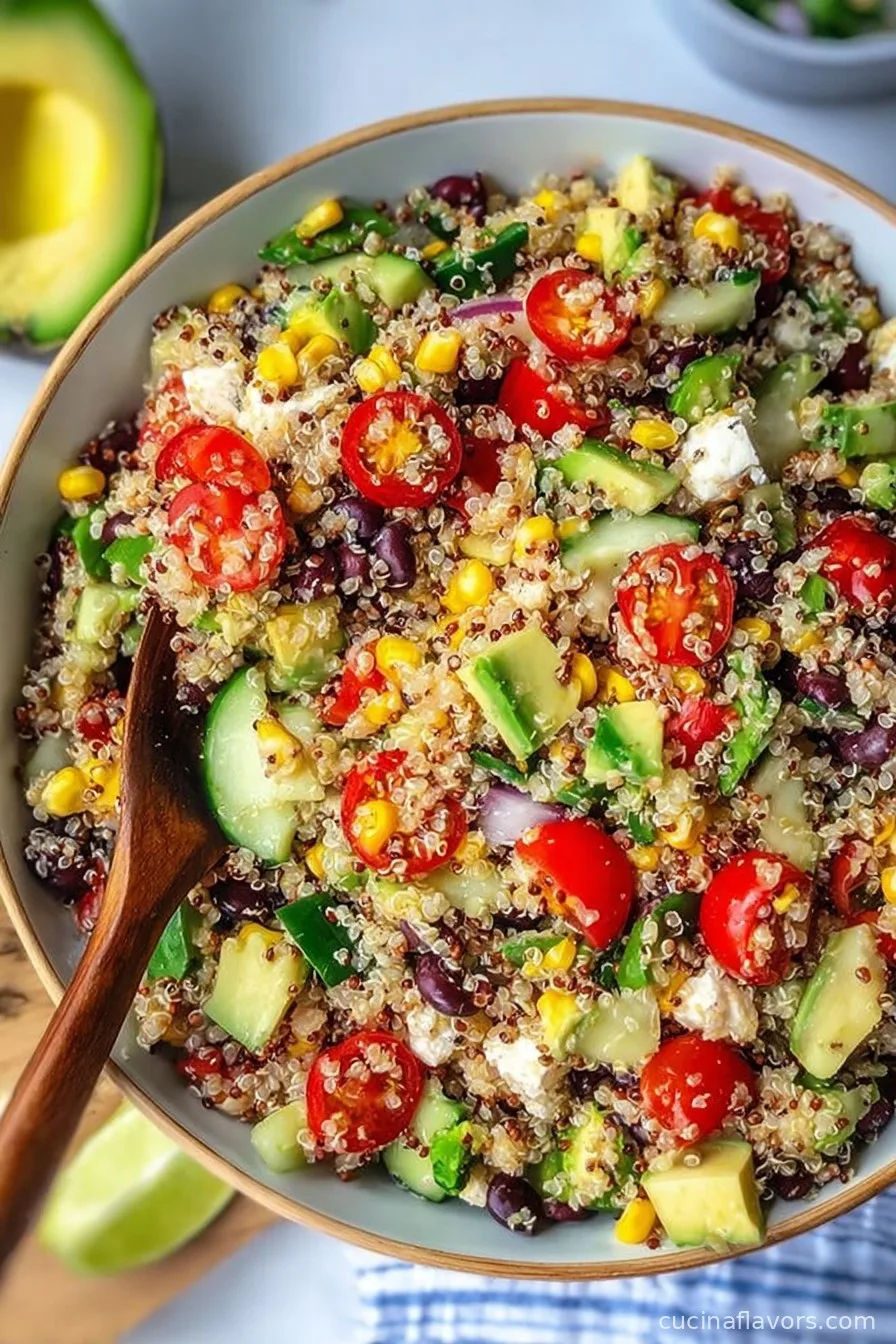
The rise of quinoa in global cuisine partly stems from its flexible culinary uses and impressive health benefits, making it a staple among those seeking plant-based protein and balanced nutrition.
Historically cultivated by the Incas in the Andes over 5,000 years ago, quinoa was revered as the 'mother of all grains' despite being technically a seed.
In this High Protein Quinoa Salad recipe, we've brought together not just quinoa, but also a variety of legumes, colorful vegetables, nuts, and a zesty dressing to create a dish that delivers both flavor and powerhouse nutrition.
The concept of high protein salads became popular as the demand for convenient, satisfying, and health-focused meals increased. With fitness enthusiasts, vegetarians, and busy professionals all striving for better options, quinoa salad rose in popularity for its versatility, ease of meal prep, and adaptability to various dietary needs.
This recipe is a modern twist on traditional grain salads, focusing on complete plant-based proteins that can be enjoyed as a main dish or a hearty side.
Whether you're new to quinoa or a long-time fan, this salad offers a satisfying and balanced meal that fits seamlessly into any healthy eating plan.
Ingredients
- 1 cup quinoa, rinsed
- 2 cups water or low-sodium vegetable broth
- 1 cup cooked chickpeas (or canned, rinsed and drained)
- 1 cup cooked black beans (or canned, rinsed and drained)
- 1 cup cherry tomatoes, halved
- 1 red bell pepper, diced
- 1 small cucumber, diced
- ½ cup red onion, finely chopped
- ½ cup shelled edamame (defrosted if frozen)
- ¼ cup fresh parsley, chopped
- ¼ cup fresh cilantro, chopped
- ⅓ cup crumbled feta cheese (optional for added protein)
- ¼ cup pumpkin seeds or sunflower seeds
- 2 tablespoons extra-virgin olive oil
- 2 tablespoons fresh lemon juice
- 1 tablespoon apple cider vinegar
- 1 teaspoon Dijon mustard
- 1 clove garlic, minced
- ½ teaspoon cumin powder
- Salt and black pepper, to taste
Instructions
- Rinse the quinoa under cold water to remove any bitterness. Combine with water or vegetable broth in a medium saucepan and bring to a boil.
- Once boiling, reduce the heat to low, cover the saucepan, and simmer for 12-15 minutes until the liquid is fully absorbed and quinoa is tender. Fluff with a fork and set aside to cool.
- In a large mixing bowl, combine the cooked quinoa, chickpeas, black beans, cherry tomatoes, bell pepper, cucumber, red onion, edamame, parsley, and cilantro.
- In a small bowl, whisk together the olive oil, lemon juice, apple cider vinegar, Dijon mustard, minced garlic, cumin, salt, and black pepper.
- Pour the dressing over the salad mixture and toss well to ensure everything is evenly coated.
- Add in crumbled feta cheese (if using) and sprinkle with pumpkin or sunflower seeds for added crunch and protein.
- Chill the salad in the refrigerator for at least 30 minutes to allow the flavors to meld.
- Gently toss again before serving and adjust the seasoning if needed.
Nutritional Information
High Protein Quinoa Salad is an excellent source of plant-based protein, thanks to the combination of quinoa, legumes, and seeds. A single serving (about 1 ½ cups) provides approximately 15-20 grams of protein, making it a satisfying option for vegetarians and those seeking to increase their protein intake.
Quinoa itself is a complete protein, containing all nine essential amino acids, which is rare among plant foods. Black beans, chickpeas, and edamame supply additional protein, fiber, and micronutrients such as folate, iron, magnesium, and potassium.
The abundance of colorful vegetables ensures a high intake of antioxidants, vitamins A and C, and phytonutrients vital for immune support and overall wellness. The healthy fats from olive oil and seeds aid in satiety and absorb fat-soluble vitamins.
This salad is relatively low in saturated fat and contains no cholesterol if feta is omitted. It is also gluten-free, high in complex carbohydrates, and features a low glycemic index, supporting steady energy levels. For those following calorie-controlled diets, each serving has approximately 350-400 calories.
Its high fiber content (7-10 grams per serving) supports healthy digestion and prolonged fullness, making it ideal for weight management and meal prep routines.

Wine and Beverage Pairings
High Protein Quinoa Salad pairs wonderfully with refreshing beverages and light wines. For wine lovers, a crisp Sauvignon Blanc or a dry Rosé enhances the salad's bright, fresh flavors. If you prefer non-alcoholic options, try serving with sparkling water infused with citrus slices or a homemade iced green tea.
For a heartier lunch or dinner, a light wheat beer or a citrus-forward craft ale also complements the dish beautifully. The salad's versatility makes it suitable for casual meals, picnics, and gatherings, regardless of your beverage preference.
Cooking Tips and Variations
To achieve the best texture for your High Protein Quinoa Salad, rinse the quinoa thoroughly to remove its natural saponins, which can create a bitter taste.
Cooking the quinoa in vegetable broth instead of water adds a depth of flavor, while allowing it to cool completely before mixing ensures a fluffier, non-sticky salad. Feel free to swap the beans for lentils or add grilled chicken or tofu for even more protein if you're not strictly plant-based.
Roasted sweet potatoes or steamed broccoli also make excellent additions, both boosting protein and micronutrient levels. For a Mediterranean twist, try adding Kalamata olives and a tablespoon of capers. If you prefer a nutty flavor, toasted almonds, walnuts, or hemp hearts can be sprinkled on top.
When making this salad in advance, keep the dressing separate and toss just before serving to maintain the crispness of the vegetables. This recipe is easily customizable; use whatever seasonal vegetables and greens you have on hand.
For an extra zesty kick, include a hint of fresh lemon zest or diced jalapeños. Remember to adjust the seasoning after chilling, as flavors can mellow while the salad sits.

Serving Suggestions
This High Protein Quinoa Salad can be served as a hearty main course or as a flavorful side dish at any time of the day. For a complete meal, enjoy it on a bed of mixed greens or arugula and serve alongside grilled vegetables or a soup.
Try packing it into a wrap or pita with extra greens for an easy portable lunch. This salad is perfect for picnics, potlucks, and barbecues, retaining its flavor and texture even after chilling or transport.
Carefully garnish with extra herbs, a sprinkle of seeds, and crumbled feta right before serving to elevate its visual appeal. Offering the salad chilled is ideal, but letting it sit out at room temperature for a few minutes enhances the natural flavors.
To serve family-style, use a large platter and surround with sliced avocado, lemon wedges, or additional protein toppings. If making ahead, layer the ingredients in a jar with the dressing at the bottom and shake when ready to eat.
Whether you're hosting a summer brunch, need an energy-boosting lunch, or want a light dinner, this salad adapts easily to most occasions, catering to both vegetarians and omnivores alike.
Health Benefits
High Protein Quinoa Salad is designed to provide maximum nutritional benefits with every ingredient carefully selected for its role in supporting overall health. Quinoa, known for its complete amino acid profile, supplies essential building blocks for muscle repair and growth, vital for active lifestyles.
The addition of beans and edamame amplifies the protein count and introduces dietary fiber, which aids in digestive health and the regulation of blood sugar levels. Fresh vegetables contribute an array of antioxidants and vitamins, bolstering immune function and reducing inflammation.
Olive oil brings in heart-healthy monounsaturated fats while helping with the absorption of fellow nutrients. This dish is also glucose-friendly due to its low glycemic index and can benefit those monitoring blood sugar or managing diabetes.
For weight-conscious individuals, the low calorie-to-nutrient ratio ensures that each portion provides satiety without excess energy intake. Furthermore, the absence of processed ingredients and the abundance of plant-based components support heart health, bone strength, and longer-lasting energy.
By enjoying this salad regularly, you can easily meet your daily micronutrient and protein requirements as part of a balanced diet.
Frequently Asked Questions
Yes, the recipe is suitable for vegans if you omit the feta cheese or use a vegan alternative. All other ingredients are plant-based.
Absolutely. This salad is perfect for meal prep and stays fresh in the refrigerator for up to four days. Store the dressing separately to preserve texture.
For additional protein, consider tossing in grilled chicken, tofu, tempeh, or extra beans. Topping with hemp seeds or nuts also increases the protein content.
Yes, feel free to substitute or mix different beans such as lentils, kidney beans, or navy beans based on personal preference or availability.
Yes, this recipe is naturally gluten-free, making it safe for those with gluten intolerances or celiac disease.
High Protein Quinoa Salad stands as a testament to the power of wholesome, balanced eating. Bursting with flavor, vibrant colors, and a range of nutrients, this recipe is easy to adapt to your dietary needs and is perfect for meal prep, lunchboxes, or shared gatherings. Its protein-rich profile keeps you satisfied longer, while the combination of grains, legumes, and fresh vegetables supports overall vitality. By adding this salad to your regular meal rotation, you pave the way for both delicious and health-conscious dining. Whether you're looking to boost your protein intake, support your active lifestyle, or simply enjoy a fresh and satisfying dish, this salad is a must-try favorite.
Ingredients
- 1 cup quinoa, rinsed
- 2 cups water or low-sodium vegetable broth
- 1 cup cooked chickpeas (or canned, rinsed and drained)
- 1 cup cooked black beans (or canned, rinsed and drained)
- 1 cup cherry tomatoes, halved
- 1 red bell pepper, diced
- 1 small cucumber, diced
- ½ cup red onion, finely chopped
- ½ cup shelled edamame (defrosted if frozen)
- ¼ cup fresh parsley, chopped
- ¼ cup fresh cilantro, chopped
- ⅓ cup crumbled feta cheese (optional for added protein)
- ¼ cup pumpkin seeds or sunflower seeds
- 2 tablespoons extra-virgin olive oil
- 2 tablespoons fresh lemon juice
- 1 tablespoon apple cider vinegar
- 1 teaspoon Dijon mustard
- 1 clove garlic, minced
- ½ teaspoon cumin powder
- Salt and black pepper, to taste
Instructions
-
1Rinse the quinoa under cold water to remove any bitterness. Combine with water or vegetable broth in a medium saucepan and bring to a boil.
-
2Once boiling, reduce the heat to low, cover the saucepan, and simmer for 12-15 minutes until the liquid is fully absorbed and quinoa is tender. Fluff with a fork and set aside to cool.
-
3In a large mixing bowl, combine the cooked quinoa, chickpeas, black beans, cherry tomatoes, bell pepper, cucumber, red onion, edamame, parsley, and cilantro.
-
4In a small bowl, whisk together the olive oil, lemon juice, apple cider vinegar, Dijon mustard, minced garlic, cumin, salt, and black pepper.
-
5Pour the dressing over the salad mixture and toss well to ensure everything is evenly coated.
-
6Add in crumbled feta cheese (if using) and sprinkle with pumpkin or sunflower seeds for added crunch and protein.
-
7Chill the salad in the refrigerator for at least 30 minutes to allow the flavors to meld.
-
8Gently toss again before serving and adjust the seasoning if needed.
Approximate Information for One Serving
Nutrition Disclaimers
Number of total servings shown is approximate. Actual number of servings will depend on your preferred portion sizes.
Nutritional values shown are general guidelines and reflect information for 1 serving using the ingredients listed, not including any optional ingredients. Actual macros may vary slightly depending on specific brands and types of ingredients used.
To determine the weight of one serving, prepare the recipe as instructed. Weigh the finished recipe, then divide the weight of the finished recipe (not including the weight of the container the food is in) by the desired number of servings. Result will be the weight of one serving.
Did you make this recipe?
Please consider Pinning it!
Leave a Reply