
Philly Cheesesteak Cabbage Wraps are an innovative, wholesome spin on the timeless Philly cheesesteak sandwich. Originating from Philadelphia, the Philly cheesesteak has become a beloved comfort food across America, typically featuring thinly sliced beef, sautéed onions, peppers, and melted cheese all packed into a soft hoagie roll.
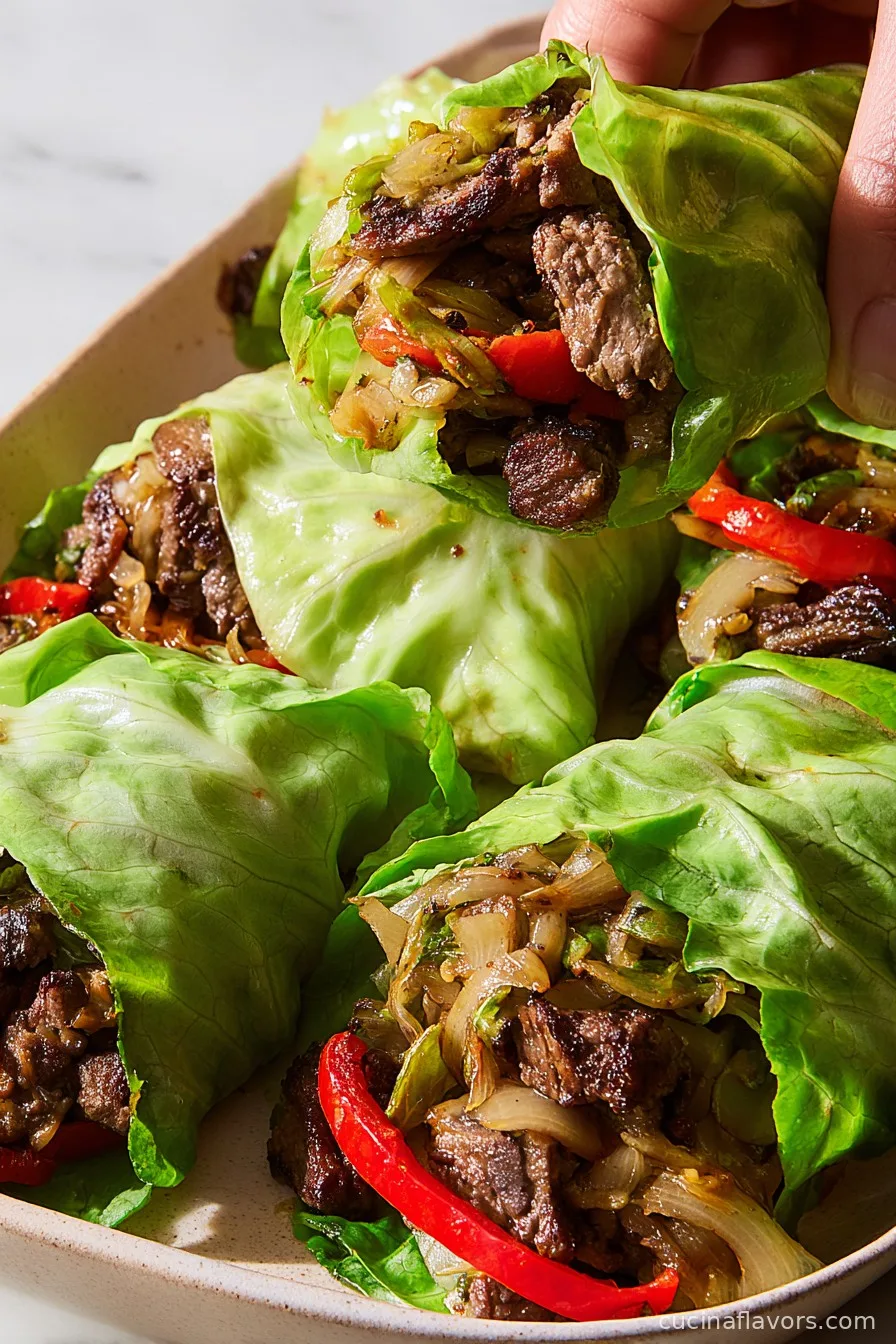
But for food lovers seeking a healthier, low-carb option, Philly Cheesesteak Cabbage Wraps present a satisfying alternative that doesn’t sacrifice flavor or texture. By substituting bread with tender cabbage leaves, this recipe significantly reduces carbohydrates while increasing fiber and essential nutrients.
The essence of the classic cheesesteak is preserved by keeping the rich interplay of juicy, thinly cut steak, caramelized onions, bell peppers, and gooey cheese. Using cabbage not only creates a lighter version but also adds a subtle crunch and earthiness, complementing the savory beef.
Perfect as a meal prep option, gluten-free lunch, or keto-friendly dinner, these wraps are packed with high-quality protein and colorful vegetables. Whether you’re committed to a health-focused lifestyle or just experimenting with sandwich alternatives, Philly Cheesesteak Cabbage Wraps make for a delicious, filling meal.
Their versatility allows for countless adaptations with different proteins, veggies, and cheeses. Dive into this modern take on a culinary classic and enjoy every guilt-free bite, as you satisfy your cravings with all the tradition, but none of the excess carbs.
Ingredients
- 1 large head of green cabbage
- 1 pound ribeye steak or sirloin, thinly sliced against the grain
- 1 tablespoon olive oil
- 1 large yellow onion, thinly sliced
- 1 green bell pepper, thinly sliced
- 1 red bell pepper, thinly sliced
- 2 cloves garlic, minced
- 1 teaspoon kosher salt
- ½ teaspoon black pepper
- 1 tablespoon Worcestershire sauce
- 6-8 slices provolone cheese
- Optional: ½ teaspoon smoked paprika
- Optional: 1 teaspoon Italian seasoning
Instructions
- Bring a large pot of salted water to a boil. Carefully peel 8-10 large, intact cabbage leaves from the head. Blanch the leaves in boiling water for 1-2 minutes until just tender but still bright green. Transfer to an ice bath to stop the cooking, then drain and set aside.
- Pat the steak dry with paper towels and season with salt, black pepper, and (optional) smoked paprika.
- Heat olive oil in a large skillet over medium-high heat. Add the sliced onions and peppers and sauté for 4-5 minutes, stirring occasionally, until softened and starting to caramelize.
- Add the minced garlic and cook for an additional 30 seconds until fragrant.
- Push the vegetables to the side of the skillet. Add the sliced steak to the pan in a single layer. Let it sear without stirring for about 1 minute so it gets a good sear, then stir and cook until just browned, about 2 more minutes.
- Stir in Worcestershire sauce and Italian seasoning (if using), then mix the meat with the peppers and onions. Remove from heat.
- Lay the blanched cabbage leaves on a flat surface. Divide the steak and vegetable mixture evenly among the leaves. Top each with a slice of provolone cheese.
- Fold the edges of the cabbage over the filling, then roll tightly to form wraps.
- Optional: For extra melt and a crispy finish, place wraps seam-side down in a lightly oiled skillet or baking dish, top with any extra cheese, and place under the broiler for 2-3 minutes until the cheese bubbles.
- Serve immediately, hot and delicious.
Nutritional Information
Philly Cheesesteak Cabbage Wraps are designed to be a nutrient-dense alternative to the carbohydrate-laden classic. Each serving (assuming the recipe yields about six wraps) contains approximately 250-280 calories, depending on the cut of steak and cheese used.
These wraps are high in protein, providing around 20-24 grams per serving, which supports muscle repair and sustained energy.
Fats are moderate, especially if you use a leaner cut of beef or reduced-fat cheese, coming in at about 14-16 grams per wrap, with most fats coming from heart-healthy olive oil and the cheese.
Carbohydrates are kept impressively low, typically under 8 grams per serving, since cabbage stands in for bread. Fiber content is boosted by the cabbage leaves and vegetables, delivering about 3 grams per wrap, aiding digestion and promoting satiety.
There's also an excellent array of vitamins and minerals: vitamin C from cabbage and bell peppers, calcium and phosphorus from the cheese, and iron from the beef. Cholesterol varies based on beef choice but can be managed by using leaner cuts.
For those managing their sodium intake, keep an eye on the cheese and Worcestershire sauce—both are main contributors to the dish’s sodium. Overall, Philly Cheesesteak Cabbage Wraps deliver balanced macronutrients with none of the empty calories found in processed breads. They fit perfectly into low-carb, keto, and gluten-free diets.
Customizing your wraps with leaner proteins or vegetarian options further adjusts the nutritional profile, making this meal adaptable to a range of dietary needs.

Wine and Beverage Pairings
Philly Cheesesteak Cabbage Wraps pair beautifully with a variety of beverages. For a classic feel, reach for a medium-bodied red wine such as Merlot or Cabernet Sauvignon; their fruit-forward notes balance the savory, cheesy richness of the filling.
If you prefer white wine, opt for a Chardonnay, which complements the slight bitterness of cabbage while highlighting the creamy cheese. Beer lovers might choose a crisp lager or a hoppy IPA, both of which cut through the fatty richness of steak and melted cheese.
For non-alcoholic refreshment, an iced herbal tea—like mint or chamomile—enhances the meal’s freshness. Sparkling water with a squeeze of lemon or lime also works wonderfully to cleanse the palate after each bite. No matter your drink of choice, choose something that lifts the flavors without overpowering the dish.
Cooking Tips and Variations
Mastering Philly Cheesesteak Cabbage Wraps comes down to smart techniques and creative tweaks. When preparing cabbage leaves, gently peel them from the core to keep them whole and intact; blanching them quickly in boiling water ensures they are pliable but not mushy.
For the ideal steak texture, the key is slicing the beef thinly against the grain—a semi-frozen steak makes this much easier. Sear the beef quickly over high heat to lock in juices while avoiding overcooking.
Both ribeye and sirloin work beautifully, but sirloin offers a leaner bite, while ribeye brings in more marbling and flavor. Don’t limit yourself to beef—chicken, turkey, or even mushrooms make fantastic fillings for those seeking variety.
Switch up the cheese with mozzarella, Swiss, or sharp cheddar for a unique flavor profile. Vegetarians can substitute meat with sautéed mushrooms and zucchini, keeping the savory essence alive. For a spicier take, toss in sliced jalapeños or add a splash of hot sauce to the filling.
When assembling the wraps, take care not to overfill so they roll tightly and hold their shape. If meal prepping, keep wraps unbaked and refrigerate in an airtight container; reheat in a skillet or oven for optimal texture. Need extra crunch? Lightly grill finished wraps for crisp edges.
Philly Cheesesteak Cabbage Wraps are versatile, so think beyond traditional—add roasted garlic, swap in different herbs, or try smoked Gouda for extra richness. With these tips, every bite will be packed with flavor, texture, and satisfaction.

Serving Suggestions
Serving Philly Cheesesteak Cabbage Wraps can be as straightforward or elevated as you like, making this recipe ideal for a quick weeknight dinner or for impressing guests at a gathering.
For an attractive presentation, arrange the wraps seam-side down on a platter and sprinkle with freshly chopped parsley or chives for vibrant color. Serve alongside a crisp green salad dressed with a light vinaigrette, which complements the bold, savory flavors of the wraps.
Roasted sweet potato wedges or a simple cucumber salad also make excellent, health-forward sides without competing for attention. For a party-friendly version, cut the wraps in half or thirds and secure each portion with a toothpick for easy, mess-free eating—perfect for appetizers or buffet spreads.
If preparing for meal prep, portion the wraps into single-serve containers along with your favorite side to ensure healthy, convenient lunches throughout the week. For dipping, consider a small bowl of creamy horseradish sauce or grainy mustard on the side, offering a zesty accompaniment to the melty cheese and steak.
When reheating, use the oven or skillet over the microwave to maintain the wrap’s structure and avoid sogginess. Philly Cheesesteak Cabbage Wraps can even be enjoyed cold for those on the go, making them truly versatile and practical.
Whether served hot or cold, as a main course or as part of a party platter, these wraps deliver all the satisfaction of the original sandwich in a light, nutritious form.
Health Benefits
Philly Cheesesteak Cabbage Wraps offer a variety of health benefits, making them a standout choice for mindful eaters. The switch from a traditional hoagie roll to cabbage leaves dramatically slashes the carbohydrate content, making this dish suitable for ketogenic, low-carb, and diabetic-friendly diets.
Cabbage is a superfood in its own right, rich in vitamin K and C, antioxidants, and fiber, which supports immune function, reduces inflammation, and promotes digestive health. The high protein content—especially when using lean steak—contributes to muscle repair, fuels prolonged satiety, and can help with weight management by curbing hunger.
Onions and bell peppers add further micronutrients, including vitamin B6, manganese, and folate, which together bolster metabolism and energy production. Using olive oil introduces healthy monounsaturated fats that support heart wellness. For those with gluten sensitivities, replacing bread with cabbage makes this recipe entirely gluten-free.
The cheese supplies calcium and phosphorus essential for bone health, and using reduced-fat versions can decrease saturated fat intake if desired. If you opt for plant-based protein as a filling, you’ll further enhance the dish’s heart-health credentials.
Philly Cheesesteak Cabbage Wraps thus cater to a wide variety of dietary needs, offering the classic flavor experience with enhanced nutritional value and minimal guilt.
Frequently Asked Questions
Yes, you can prepare the filling and cabbage leaves in advance and assemble the wraps up to 2 days ahead. Store them in the refrigerator, then bake or grill just before serving to maintain the best texture.
Absolutely. These wraps are very low in carbohydrates thanks to the use of cabbage rather than bread, making them ideal for keto and low-carb eating plans.
You can use dairy-free cheese or nutritional yeast for a cheesy taste, and swap the steak for mushrooms, zucchini, or tofu to create a fully vegetarian version.
Peel leaves carefully and blanch them just until tender. Overcooking can make them too soft and tear-prone, while undercooking makes them hard to wrap.
While it's possible to freeze them, the cabbage texture may soften further upon reheating. For best results, freeze the filling separately and assemble fresh wraps when ready to serve.
Philly Cheesesteak Cabbage Wraps strike the perfect balance between flavor, nutrition, and versatility, delivering the beloved taste of the traditional Philly cheesesteak in a vibrant, low-carb package. By embracing wholesome ingredients like cabbage, lean steak, and colorful veggies, you can enjoy a comfort food classic without sacrificing your health-conscious goals. Whether you’re hosting guests, meal prepping for the week, or simply seeking a new favorite, this recipe adapts to virtually any need. Fast to assemble and easy to personalize, Philly Cheesesteak Cabbage Wraps are a modern classic you’ll want to prepare again and again. Enjoy the rich, bold flavors and nourish your body, one delicious bite at a time.
Ingredients
- 1 large head of green cabbage
- 1 pound ribeye steak or sirloin, thinly sliced against the grain
- 1 tablespoon olive oil
- 1 large yellow onion, thinly sliced
- 1 green bell pepper, thinly sliced
- 1 red bell pepper, thinly sliced
- 2 cloves garlic, minced
- 1 teaspoon kosher salt
- ½ teaspoon black pepper
- 1 tablespoon Worcestershire sauce
- 6-8 slices provolone cheese
- Optional: ½ teaspoon smoked paprika
- Optional: 1 teaspoon Italian seasoning
Instructions
-
1Bring a large pot of salted water to a boil. Carefully peel 8-10 large, intact cabbage leaves from the head. Blanch the leaves in boiling water for 1-2 minutes until just tender but still bright green. Transfer to an ice bath to stop the cooking, then drain and set aside.
-
2Pat the steak dry with paper towels and season with salt, black pepper, and (optional) smoked paprika.
-
3Heat olive oil in a large skillet over medium-high heat. Add the sliced onions and peppers and sauté for 4-5 minutes, stirring occasionally, until softened and starting to caramelize.
-
4Add the minced garlic and cook for an additional 30 seconds until fragrant.
-
5Push the vegetables to the side of the skillet. Add the sliced steak to the pan in a single layer. Let it sear without stirring for about 1 minute so it gets a good sear, then stir and cook until just browned, about 2 more minutes.
-
6Stir in Worcestershire sauce and Italian seasoning (if using), then mix the meat with the peppers and onions. Remove from heat.
-
7Lay the blanched cabbage leaves on a flat surface. Divide the steak and vegetable mixture evenly among the leaves. Top each with a slice of provolone cheese.
-
8Fold the edges of the cabbage over the filling, then roll tightly to form wraps.
-
9Optional: For extra melt and a crispy finish, place wraps seam-side down in a lightly oiled skillet or baking dish, top with any extra cheese, and place under the broiler for 2-3 minutes until the cheese bubbles.
-
10Serve immediately, hot and delicious.
Approximate Information for One Serving
Nutrition Disclaimers
Number of total servings shown is approximate. Actual number of servings will depend on your preferred portion sizes.
Nutritional values shown are general guidelines and reflect information for 1 serving using the ingredients listed, not including any optional ingredients. Actual macros may vary slightly depending on specific brands and types of ingredients used.
To determine the weight of one serving, prepare the recipe as instructed. Weigh the finished recipe, then divide the weight of the finished recipe (not including the weight of the container the food is in) by the desired number of servings. Result will be the weight of one serving.
Did you make this recipe?
Please consider Pinning it!

Leave a Reply