
Egg Roll Bowls have taken the culinary world by storm as a modern twist on the classic egg roll. Blending convenience with the vibrant flavors of Asian cuisine, they offer a delicious and nutritious meal without the fuss of deep frying or rolling wrappers.
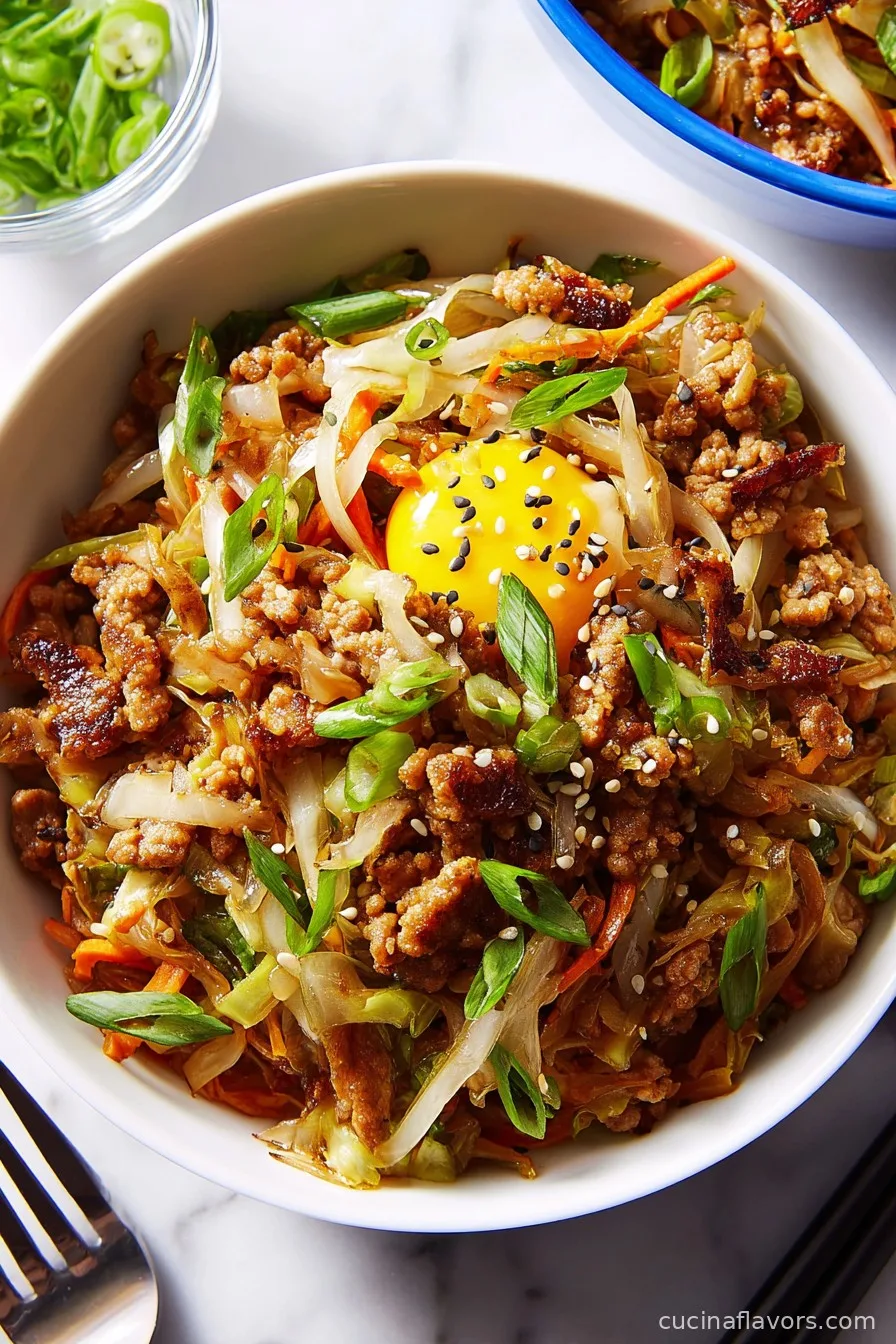
This trending dish deconstructs everything you adore about an egg roll—savory ground meat, crisp vegetables, aromatic garlic and ginger, and a tangy soy-based sauce—serving it all in a simple bowl.
Inspired by Chinese-American takeout favorites, Egg Roll Bowls perfectly capture the essence of familiar comfort food, yet transform it into a low-carb, gluten-free, and high-protein option suitable for busy lifestyles.
As meal prep and wellness trends grow, the popularity of Egg Roll Bowls rises thanks to their adaptability, quick preparation, and customizable ingredients.
Whether you are looking for a weeknight dinner, craving bold flavors without added calories, or on a keto or paleo diet, Egg Roll Bowls are a winning choice. This dish invites creativity and makes mealtime easier, healthier, and more satisfying than ever before.
Dive into this detailed, SEO-friendly recipe and discover why Egg Roll Bowls have become a staple in kitchens across the globe.
Ingredients
- 1 pound ground pork, chicken, turkey, or beef
- 1 tablespoon olive oil or sesame oil
- 1 small onion, diced
- 3 garlic cloves, minced
- 1 tablespoon fresh ginger, grated
- 4 cups shredded green cabbage (about half a medium head)
- 1 cup shredded carrots
- 3 tablespoons soy sauce or tamari (low sodium preferred)
- 1 tablespoon rice vinegar
- 1 tablespoon sriracha or chili paste (optional, to taste)
- 1 tablespoon hoisin sauce (optional for sweetness)
- 2 green onions, sliced
- 1 teaspoon toasted sesame seeds (for garnish)
- Fresh cilantro, chopped (for garnish)
- Salt and pepper, to taste
Instructions
- Heat olive oil or sesame oil in a large skillet or wok over medium heat.
- Add diced onion and sauté for 2-3 minutes until softened and translucent.
- Stir in minced garlic and grated ginger, cooking for 30 seconds until fragrant.
- Add ground pork, chicken, turkey, or beef to the skillet, breaking it up with a spoon, and cook until no longer pink.
- Stir in shredded cabbage and carrots, tossing to combine evenly with the meat mixture.
- Drizzle soy sauce, rice vinegar, and sriracha or chili paste (if using) over the mixture. Add hoisin sauce for sweetness if desired.
- Continue to cook for 5-8 minutes, stirring often, until vegetables are tender but still have a slight crunch.
- Season with salt and pepper to taste. Remove from heat.
- Top Egg Roll Bowls with sliced green onions, toasted sesame seeds, and chopped fresh cilantro before serving.
- Serve hot, by itself or over a base such as steamed rice, cauliflower rice, or noodles if desired.
Nutritional Information
Egg Roll Bowls are not only packed with taste but are also a nutrient-dense meal choice. A single serving of this recipe (prepared with lean ground turkey and no added sugar) provides approximately 300-350 calories, making it suitable for those monitoring calorie intake.
The dish is rich in protein—about 25 grams per serving—which supports muscle health and promotes satiety. The abundance of cabbage and carrots not only adds color but also increases dietary fiber, vitamins A, C, and K, and antioxidants, ensuring the dish offers immune-boosting and gut-supporting benefits.
Because Egg Roll Bowls use minimal oil and are pan-cooked rather than fried, they contain much less fat than traditional egg rolls. Additionally, the use of low-sodium soy sauce helps reduce the overall sodium content, promoting heart health.
Those following gluten-free diets can opt for tamari instead of regular soy sauce. For more health-conscious eaters, ground chicken or turkey further lowers the fat content. The customizable nature of Egg Roll Bowls means you can tailor the nutritional profile to suit your needs, including keto, paleo, or plant-based diets.
The meal is naturally free of refined sugars if you skip the hoisin sauce, and offers a balanced mix of healthy fats, lean proteins, and complex carbohydrates when paired with whole grains or cauliflower rice.

Wine and Beverage Pairings
Egg Roll Bowls pair beautifully with a range of beverages, balancing bold savory flavors with refreshing sips. For wine lovers, an off-dry Riesling or a lively Sauvignon Blanc enhances the dish’s aromatic notes without overpowering the subtle spice.
If you prefer beer, reach for a crisp pilsner or a light lager, as these beers cleanse the palate between bites. Asian-inspired cocktails such as a ginger-lime mojito or a simple sake spritz can make the meal feel extra festive.
For non-alcoholic pairings, chilled green tea, sparkling water with lime, or a cucumber-infused drink bring a cooling contrast to the dish’s warmth. Each beverage, chosen thoughtfully, will amplify the overall Egg Roll Bowl experience.
Cooking Tips and Variations
Achieving the perfect Egg Roll Bowl comes down to a few clever culinary tips and easy-to-implement tweaks. To maximize flavor, don’t skip on fresh garlic and ginger—these aromatics infuse the bowl with the classic egg roll taste.
For extra crunch, toss in a handful of water chestnuts or bean sprouts in the final minute of cooking. Want to add a smoky profile? A dash of smoked paprika or a splash of toasted sesame oil after cooking will deepen the flavor.
Easily swap ground pork with ground chicken, turkey, or a plant-based crumble for a meatless version. If you're craving extra color, try purple cabbage or bell peppers. For those avoiding soy, coconut aminos make a tasty substitute.
Don’t be afraid to dial up or down the heat—adjust sriracha or chili paste to your desired spice level. For meal prep, these bowls store very well in the refrigerator for up to four days, making them ideal for grab-and-go lunches.
Double the recipe to ensure leftovers and consider freezing individual portions for future quick meals. Lastly, customize toppings with toasted sesame seeds, crispy fried onions, or even a drizzle of your favorite Asian-inspired dressing to elevate your Egg Roll Bowls to gourmet status.

Serving Suggestions
When it comes to serving Egg Roll Bowls, presentation and accompaniments can elevate a simple meal into an inviting spread. Begin by spooning your hot, savory egg roll mixture into deep bowls, allowing the vibrant colors of the vegetables to shine.
For a meal with extra substance or for those seeking variety, serve these bowls over a base. Steamed rice or brown rice is a classic choice, but for those who are carb-conscious, cauliflower rice or shirataki noodles are excellent alternatives.
Top each bowl creatively with garnishes like sliced green onions, a sprinkle of toasted sesame seeds, and a handful of fresh cilantro for a burst of brightness.
Offer chili sauce, extra soy sauce, or a drizzle of sesame oil on the side so each diner can tailor the flavor to their liking. For family meals, consider setting up a build-your-own bowl station, letting everyone customize their toppings and bases.
Egg Roll Bowls are just as delicious at room temperature, making them ideal for lunchboxes or potlucks. Pair with a simple cucumber salad, quick pickled vegetables, or a light soup for a complete Asian-inspired meal.
However you serve them, Egg Roll Bowls deliver satisfying warmth and loads of flavor with every bite.
Health Benefits
The Egg Roll Bowl’s primary health benefits stem from its abundance of fresh, whole ingredients and customizable macros. Cabbage is the star, providing dietary fiber for digestive health, antioxidants, and vitamin C for robust immunity. Inclusion of carrots supplies beta-carotene, supporting eye health.
Lean ground meats or plant-based crumbles ensure high-quality protein, essential for muscle repair, metabolic health, and prolonged satiety. Since the dish is pan-cooked with minimal oil, it significantly reduces the unhealthy fats typically found in fried egg rolls, which can help support weight management and cardiovascular health.
The addition of garlic and ginger adds not only bold flavor but also anti-inflammatory and immune-boosting compounds. By swapping regular soy sauce with low-sodium or gluten-free alternatives, you reduce sodium intake, supporting blood pressure management.
The adaptability of Egg Roll Bowls further allows for the inclusion of other nutrient-dense vegetables such as bell peppers, mushrooms, or snow peas. Ultimately, Egg Roll Bowls are a balanced, satisfying choice that fits seamlessly into a variety of healthy eating patterns and dietary preferences.
Frequently Asked Questions
Absolutely. Substitute the ground meat with firm tofu, tempeh, or a plant-based ground meat alternative. Use tamari or coconut aminos and skip the hoisin sauce or choose a vegan-friendly version to keep the dish fully plant-based.
Yes, Egg Roll Bowls are excellent for meal prep. They store well in the refrigerator for up to four days and taste just as flavorful when reheated. Prepare large batches and portion into individual containers for a quick, healthy lunch or dinner.
For a low-carb Egg Roll Bowl, use ground chicken or turkey and increase the proportion of cabbage and low-carb vegetables. Serve over cauliflower rice instead of regular rice to further reduce carbohydrates.
Yes, Egg Roll Bowls can be frozen. Allow the cooked mixture to cool, portion into airtight containers, and freeze for up to three months. Thaw in the refrigerator overnight and gently reheat in a skillet for best results.
Feel free to add thinly sliced bell peppers, mushrooms, baby corn, snap peas, or spinach. These additions create more variety, nutrition, and color in your Egg Roll Bowls.
Egg Roll Bowls perfectly blend the comforting flavors of your favorite takeout with the convenience and health consciousness of modern home cooking. This recipe offers an invitation to experiment, adapt, and savor bold Asian-inspired tastes in every nourishing bite. Whether you are meal prepping for a busy week, looking to enjoy a lighter option, or just craving the familiarity of egg rolls without the extra calories, Egg Roll Bowls provide an answer. Enjoy the simplicity of preparation, the flexibility in ingredients, and the satisfying result. Make this Egg Roll Bowl recipe a regular part of your repertoire for a flavorful, healthy, and easy meal solution.
Ingredients
- 1 pound ground pork, chicken, turkey, or beef
- 1 tablespoon olive oil or sesame oil
- 1 small onion, diced
- 3 garlic cloves, minced
- 1 tablespoon fresh ginger, grated
- 4 cups shredded green cabbage (about half a medium head)
- 1 cup shredded carrots
- 3 tablespoons soy sauce or tamari (low sodium preferred)
- 1 tablespoon rice vinegar
- 1 tablespoon sriracha or chili paste (optional, to taste)
- 1 tablespoon hoisin sauce (optional for sweetness)
- 2 green onions, sliced
- 1 teaspoon toasted sesame seeds (for garnish)
- Fresh cilantro, chopped (for garnish)
- Salt and pepper, to taste
Instructions
-
1Heat olive oil or sesame oil in a large skillet or wok over medium heat.
-
2Add diced onion and sauté for 2-3 minutes until softened and translucent.
-
3Stir in minced garlic and grated ginger, cooking for 30 seconds until fragrant.
-
4Add ground pork, chicken, turkey, or beef to the skillet, breaking it up with a spoon, and cook until no longer pink.
-
5Stir in shredded cabbage and carrots, tossing to combine evenly with the meat mixture.
-
6Drizzle soy sauce, rice vinegar, and sriracha or chili paste (if using) over the mixture. Add hoisin sauce for sweetness if desired.
-
7Continue to cook for 5-8 minutes, stirring often, until vegetables are tender but still have a slight crunch.
-
8Season with salt and pepper to taste. Remove from heat.
-
9Top Egg Roll Bowls with sliced green onions, toasted sesame seeds, and chopped fresh cilantro before serving.
-
10Serve hot, by itself or over a base such as steamed rice, cauliflower rice, or noodles if desired.
Approximate Information for One Serving
Nutrition Disclaimers
Number of total servings shown is approximate. Actual number of servings will depend on your preferred portion sizes.
Nutritional values shown are general guidelines and reflect information for 1 serving using the ingredients listed, not including any optional ingredients. Actual macros may vary slightly depending on specific brands and types of ingredients used.
To determine the weight of one serving, prepare the recipe as instructed. Weigh the finished recipe, then divide the weight of the finished recipe (not including the weight of the container the food is in) by the desired number of servings. Result will be the weight of one serving.
Did you make this recipe?
Please consider Pinning it!
Leave a Reply